
Yoga is an ancient and dynamic practice that has its roots in India, and among a wide range of different yoga styles, Hatha yoga is considered the beginning and foundation for modern yoga styles. The word hatha has a meaning infused, which translates as “ha” meaning sun and “tha” meaning moon in Sanskrit. It showcases and puts much value in the concept of balance, which represents using opposing energies within us in union.
If you are a beginner and are exploring your way into yoga, then practicing Hatha yoga can bring you a number of great benefits. It includes a subtle mix of various asana practices and mindful breathing techniques (pranayamas), which not only improve your flexibility but also strengthen your body and enhance your overall well-being. While regular practice can help with a lot of things, including stress reduction and fostering inner peace,.
So if you are curious about how yoga can enhance and improve the quality of your life and how much potential it has for changing your life, then Hatha yoga is the perfect to begin the oracle.

The Essentials of Hatha Yoga Practice
Asanas (Postures): The Foundation of Movement
Asanas, or the physical postures, are the core aspects of Hatha yoga, and in this section, we will discuss exploring and maintaining some fundamentals to have an effective and safe practice.
Alignment and Breathwork: The Guiding Principles
Before beginning any specific posture, you need to keep these two things in mind:
Alignment:
Proper alignment is the only way to save yourself from any injury or mishap during the practice. While ensuring safety, they also maximise the benefit of each pose. Choose a qualified and experienced yoga instructor, as it will be helpful to provide you with the correct guidance on optimal alignment for each asana.
Breathwork (Pranayama):
In yoga, breath is considered a powerful bridge between mind and body. When you coordinate your body movements with your breath, it brings focus and control to your practice. It’s best to focus on inhaling while you open your body and exhaling as you release the tension.
Beginner-Friendly Asanas:
Let’s take a quick note on some basic poses, categorized by how they function:
Standing Poses (Balance and Strength):
Tadasana (Mountain Pose):
- Stand tall with your knees straight.
- Keep your feet hip-width apart.
- Ground through your soles.
- Stretch your arms up and stand on your feet.
- Come down, stand at your feet, and put our hands down. Repeat a few times.
Vrikshasana (Tree Pose):
- Stand straight and tall to balance your body on one leg.
- Hold the other leg and place it on the inside of your thighs.
- Join both your palms in a Namaste and bring it to your chest.
- Hold the pose and breathe steadily.
Benefits of Standing Poses
- It helps reduce the overall body weight.
- Strengthen the ankles, hips, and chest.
- Improves digestion and concentration.
- It calms the mind and releases stress.
- Stretch the thigh muscles and abdominal organs.
Forward Bends (Flexibility and Inner Peace):
Balasana (Child’s Pose):
- Kneel down on the floor.
- Keep your feet placed on the mat.
- Take a breath and spread your knees to the length of your hips.
- Keep your shoulders on your knees.
- Extend your hands straight upwards and rest them on the mat.
Uttanasana (Standing Forward Fold):
- Stand straight on your feet and keep your spine straight.
- Balance your weight equally on both legs.
- Keep your arms over your head and motion your breathing while inhaling.
- Enhale, stretch your body, and hinge at the hips.
- Bend forward completely with a flat back.
- Fold your body down towards your feet.
Benefits of forward-bending poses:
- Strengthen the thighs, knees, and legs.
- It helps reduce tension in the lower back.
- It helps in stretching the back, spine, and hips.
- It calms the mind and balances the nervous system.
- Improves the digestive system.
Twists (Detoxification and Digestion):
Marjariasana (Cat-Cow Pose):
- Sit in the table-top position.
- Keep your palms, knees, and toes on the floor.
- Engage your core and draw your belly button inward.
- For the cat pose, arch the back and drag your belly towards the mat.
- Hold your breath and feel the stretch in your back and core.
- For the cow pose, exhale and round the back towards the ceiling.
- Tuck your chin to the chest while engaging your core.
- Feel like you are pushing the floor away from you.
- Hold your breath and feel the stretch in your neck and shoulders.
Vakrasana (Seated Twist):
- Sit on the floor and extend your legs in front.
- Engage your core and keep your spine erect and straight.
- Extend your arms out to the sides while keeping your palms facing down.
- Fold your right leg and bring your foot outside of your left thigh.
- Bring your left arm behind you while keeping the right one on the left knee.
- Maintain breathing, and repeat it on the other side.
Benefits of Twists:
- Improves muscular balance and coordination.
- It calms the nervous system.
- Creates space in the hips, shoulder, and spine.
- It helps relax the muscles around the spine.
- Aid in decompressing the spinal column.
Sun Salutations (Surya Namaskar):
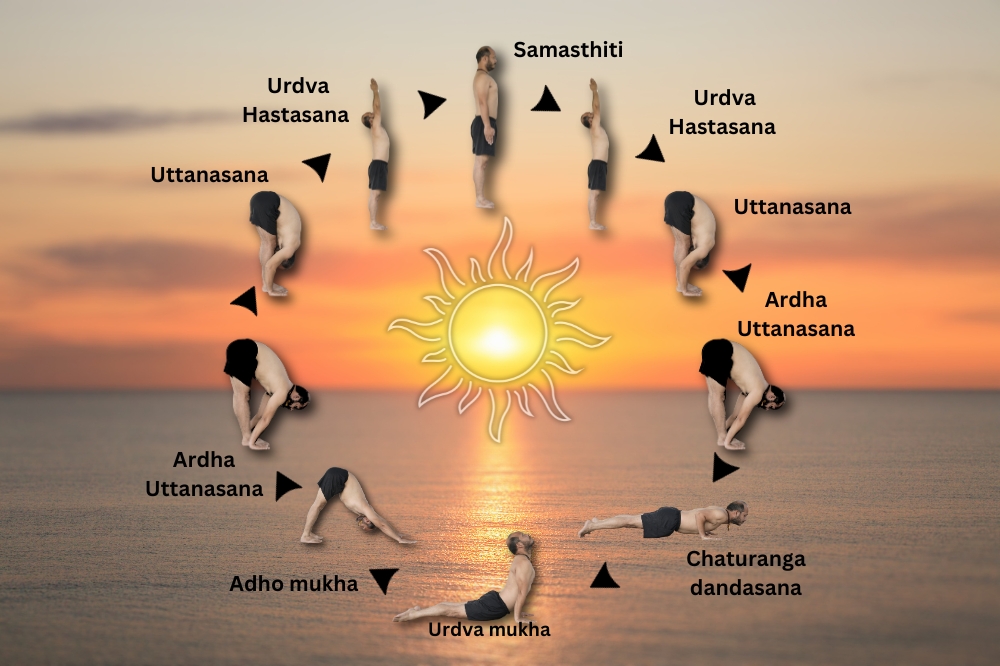
Sun salutations are the foundational sequences that can be performed first or at any time. These sequences link a series of several pictures together in a flowing movement that is synchronised by breath. They are perfect for a complete body workout and can be practiced at various speeds depending on the exercise level of the individual or person doing it.
These are the beginning yoga poses in Hatha yoga, but as you progress in your practice, you will get to explore a wide range of asanas that will further enhance your flexibility and practice.
Pranayama (Breathing Techniques): The Power of the Breath

Breath plays a vital role in yoga practice, as it is considered the life force. When you understand the connection our body has between the breath and the movements we do, it allows you to control your body’s energy (prana) and enhance and improve your overall practice.
Simple breathing exercises:
Ujjayi (Victorious Breath):
In this breathing technique, you need to constrict your throat slightly while inhaling and exhaling, creating a soft, hissing sound. This breathing technique focuses mainly on the mind and helps in energising the body.
Dirga Swasam (Three-Part Breath):
As stated by the name, you are required to divide your breath into three parts. First you will fill your lower belly, then you will move to the mid-ribs and, in the end, the upper chest. And then you will have to exhale in the reversing sequence. The breath brings peace and promotes overall relaxation by calming your nervous system.
Benefits of Mindful Breathing:
Mindful breathing techniques help you build focus and create a sense of inner peace and well-being. When you focus solely on your breathing, it helps in distracting your mind and reducing stress while improving overall concentration and boosting the sense of calmness within.
Getting Started with Hatha Yoga: The Essentials You Need
We have already discussed the asanas and postures and what you will learn. But still, there might be many questions coming into your mind about beginning the class. This section will give you the knowledge to navigate your first class and make you feel comfortable while stepping onto your yoga mat.
A Breakdown of the Class Structure:
Every Hatha yoga class follows a well-defined set of structures that allow you to form practice and ease into the practice with rhythm. Here is what you can expect:
- Warm-up (5–10 minutes): You will begin with some gentle movements and stretches to prepare your body for more activeness and asana practice.
- Asana Practice (30–45 minutes): This is the essential part of the class, where you will flow both physically and mentally through a sequence of postures that are designed specifically to improve overall bodily strength, flexibility, and balance.
- Cool-down (5–10 minutes): After some heavy movements, you will go through some calming stretches and postures to help your body get calm and transition from exertion to relaxation.
- Relaxation (5–10 minutes): The class will end with a relaxation pose like Savasana (corpse pose), which is the final stage that allows your body and mind to completely relax and integrate the practice.
Respecting Etiquette:
Respect and mindfulness are essential elements to keep in mind while practicing yoga. Here are some helpful points to remember in order to maintain an inclusive and positive environment in the classroom:
- Arrive early: Punctuality is the key; try to arrive a few minutes early for the class. This will allow you adequate time to settle in, resolve your query, and find a comfortable spot.
- Maintain personal space: While keeping a focus on your practice, do not forget to be aware of your fellow yogis too. Maintain a respectful distance between the mats for better focus.
Choosing Your Perfect Class:
For individuals with different levels, there are a variety of Hatha yoga class types, each catering to the specific needs of individuals. Here is how you can find the right fit for you:
- Beginner Hatha: These classes are designed for newcomers and teach you the fundamental postures of Hatha Yoga with clear instructions and modifications for beginners.
- Gentle Hatha: These classes are beneficial for those individuals who are going slow in their practice with some limitations, as these classes focus on relaxation and general stretches only.
- Restorative Hatha: These classes utilise props for support and include advanced postures for passive stretching and deep relaxation.
Finding a Qualified Instructor:
A supportive and qualified instructor plays a vital role in guiding you safely and effectively in your yoga journey. It is essential to look for someone with years of experience in teaching Hatha Yoga.
Also, look for a yoga school that is registered with the Yoga Alliance and has a good reputation for teaching and conducting classes, such as Bali Yogshala.
Preparing for Your First Class:
Don’t be nervous; just be mentally prepared, and it can ease your first-class jitters. Here’s what you can pack and bring to the class:
- Comfortable Clothing: Wear loose clothes that allow you to move freely. You can also go for natural fabrics like cotton.
- Yoga Mat: A yoga mat is a one-time investment, so get one that provides ample support and cushioning.
Conclusion:
As you begin your journey with the practice of Hatha yoga, remember the array of benefits it offers. Do not forget to maintain a regular practice, as it is the key to a flexible and strong body with improved balance. But apart from its physical aspects, it can also be a powerful tool for various mental issues, which include stress management, inner peace, and relaxation. The mindful breathing techniques this yoga offers will not only benefit you during the class but can also help you become calmer and more focused in your everyday life.
The wait is over. Just pack your bag, get your mat, and begin learning Hatha yoga now. There are countless resources available to you to support you on your journey. Many reputable yoga studios, such as Bali Yogshala, offer introductory classes to provide you with a wealth of information and proper guidance and inspiration. So take the first step and begin your practice while discouraging the immense benefits of this beautiful practice.
Get in Touch:
Best Yoga Teacher Training In Bali | 100 Hour Yoga Teacher Training In Bali | 200 Hour Yoga Teacher Training In Bali


