Tag: yttc

  • 5 Ways to Nail Downward Facing Dog as a Beginner

    5 Ways to Nail Downward Facing Dog as a Beginner

    Downward-Facing Dog: Slightly threatening for most people, especially those who are not used to exercising. At first, one could be overwhelmed by the sight of practitioners doing what looks like a backflip, their bodies shaping the image of a triangle.

    Hamstrings are often tight, wrists are sore, and balance is often unstable, which gives it an unrealistic appearance. But fear not! People can easily find their way in units to this wonderful pose if they follow instructions correctly. It is time to remove the labels and find out how to make Downward Dog easy and fun for everyone.

    Adho Mukha Svanasana, or downward-facing dog is the standard asana or posture in yoga, and it is beneficial in almost all aspects of a person. This inverted V-shape pose opens your total body, tones the stomach and arms, activates circulation in the body, and is believed to assist in stilling the mind. As for the physical aspect, DDF is perfect for increasing lordosis, correcting posture, and relieving tension in the neck-tracheal region and shoulders.

    However, there is generally great difficulty in mastering DDF, particularly for first-timers in the profession. Correct position and detailed positioning are important to minimise the risks of harm and get the most from this yoga practice. The complex variations should not be attempted before developing a solid base.

    In this blog, we have outlined five simple techniques for the practice of DDF for the benefit of those who are new to such practice. No matter what type of challenge you have with flexibility, strength, or balance, these yoga tips will help you find the right tutorial for your body type and develop confidence in practicing.

    Mastering the Basics

    However, let us first define a proper set of principles on which the yoga practice of downward-facing dog modification will be based.

    The Basic Downward Dog

    Firstly, you should enter the push-up position on your hands and knees, with your hands placed slightly ahead of your shoulders and your knees placed directly under your hips or lower abdomen.

    At this point, exhale, flatten your hands to the mat, bend your knees, and without bending your hips, lower your knees from the floor as high as possible and as close to you as possible. The position of your body should look like a V in reverse.

    • Hand Placement: Your hands must rest flat, and your palms must touch the floor. Your fingers should be slightly stretched and aligned in the forward direction.
    • Leg Position: Try to pull your heels down and towards the ground as far as you can, even though they should not reach the ground. Bend your knees so you can try to raise your kneecaps with the help of your quadriceps.
    • Core Engagement: Inhale, and at the same time, draw your belly button towards the spine in order to tighten the abdominal muscles. This assists in the stabilisation of the body.
    • Head Alignment: Allow the head to be free and to gently rest on the arms. If you want to fix your gaze somewhere, you can look at your feet or your navel.

    Common Mistakes and Corrections:

    • Rounded back: This mostly results in tight hamstrings. Leaning the knees slightly, you should concentrate on the stretching of the spine.
    • Sagging hips: twist your waist and try to bring your hip closer to the ceiling.
    • Collapsed wrists: Place your fingers firmly against the mat and then gently move the fingers apart.
    • Overarching lower back: This puts stress on the back muscles and thus can cause a backache. Try to stand slightly, bending your knees, as this reduces pressure on the joints.

    Building Strength and Flexibility:

    In order to go deeper with your downward dog, work on your strength and the versatility of your body. Some of the exercises to be included are wrist strengthening exercises, hamstring stretching, and core exercises. Besides, you can also include the plank pose, cobra pose, and split downward dog pose in your warm-up shots.

    Remember, consistency is key. After you have exercised for some time, the strength components will enhance, and flexibility will increase to the extent that your downward dog will be much deeper.

    Modifications for Beginners

    Finding Your Downward Dog

    As with many things in life, not everyone can master the straight-back pose the first time they attempt a downward dog pose. That’s okay! The beauty of yoga is being able to figure out what yoga poses or movements help achieve that. Now let’s take a look at some adjustments that can make this position easier.

    Knee-Bent Downward Dog

    If your hamstrings are tense or your lower back aches, try bending your knees. This modification decreases the direct pressure on your lower back and helps you shift your focus to elongating your vertebral column.

    Placing the hands and arms as far from the body as is comfortable, try to move the knees towards the chest as well. It’s going to take more time before you can start experiencing improved flexibility, as your legs will slowly straighten over time.

    Wall Downward Dog

    Having a wall to lean on as well as align oneself with can be a great help. With your back to a wall, position your front foot at a distance that is approximately the length of your arm from your side. Stand close to the wall with your fingertips touching the surface, with the distance between your hands being about shoulder-width.

    Step forward until the back of each foot is touching the ground, with your body balancing as a V-shape. This modification allows you to get the right position of your body and, at the same time, strengthens the leg and arm muscles.

    Props: Your Yoga Allies

    Yoga blocks and blankets are very useful tools when it comes to ensuring the right placement of the body. You can use the block under your wrists to decrease the pressure on your wrists or put it under your hips to position yourself in the right manner.

    You can fold a blanket and place it under your knees so as to add support and increase your level of comfort. Try shifting the position of the prop and discovering the position that is most comfortable for your body.

    So, always remember that this is a process of getting comfortable with your body and fully reconnecting with it. It is always recommended to try different combinations of modifications to see what suits the best.

    Incorporating DDF into Your Routine

    Having learned about Downward Facing Dog and its variations, it is time to discover how you can incorporate the asana into your yoga practice session.

    How Often Should You Practice DDF?

    Consistency is the name of the game when it comes to getting better at your downward-facing dog. It is recommended to use it in your practice no less than twice a week but no more than three times a week. It does not necessarily have to mean long and extensive training; even short and targeted sessions can have a positive impact.

    Sequencing DDF

    It is important to note that to increase the overall effectiveness of Downward Dog, it can be combined with other poses. Namely, you could begin with a warm-up routine and then go to the series of sun salutations; finally, you would include the downward-facing dog as an element in the flow.

    It is useful to finish the practice with the last couple of minutes spent in downward-facing dog pose, which helps to organise the mind and stretch the body.

    Quick DDF Practice

    In general, busy beginners may prefer a short practice, but this doesn’t mean that such practices will not be effective. It would be beneficial if one could try holding this pose for about 5–10 breaths and concentrate on the positioning of the body and breathing. You can repeat this a few times throughout the day, though the best is probably before going to bed.

    Remember, progress takes time. Do not rush, and have fun discovering this very useful asana and incorporating it into your daily yoga practice.

    Building strength and flexibility

    If you want to enhance your yoga practice of Downward Dog, it is critical to work on the strength and flexibility that are necessary for the pose.

    Targeted Exercises

    • Wrist Strength: The wrists need to be powerful in order to hold your body weight in a downward-facing dog. Practice wrist circles, holding the hands against a wall, or using a resistance band.
    • Shoulder Flexibility: It will assist in stretching the spine in an upright manner during the exercise when your shoulders are opened. Try to include shoulder-opening exercises such as cow face pose and eagle arms in your yoga practice.
    • Hamstring Flexibility: The problem with limited hamstrings is that they can prevent you from fully bending the hips to make the pose deeper. Do exercises such as Downward-Facing Dog with feet wide apart, Standing Forward Fold, or a supported hamstring stretch.

    Core Strength

    A good foundation is important to maintain in a downward dog, especially when the legs are outstretched. Plank, boat pose, and leg raise are some of the yoga poses that can assist in strengthening the muscles of the core.

    Complementary yoga poses

    Other specific yoga poses can also be integrated into your Downward Dog experience.

    • Plank: It effectively tones your abdomen, arms, and wrists in readiness for the support you are likely to use when coming up to the position of a downward facing dog.
    • Cobra: This backbend is a great stretch for the spine to counterbalance the forward stretch done in the downward-facing dog posture.
    • Downward Dog Split: This pose relaxes the hamstrings and calves for the benefit of extending the range of motion in the legs during a downward-facing dog.

    Remember, progress takes time. It is also important to accept the changes, be kind to yourself, and remember that even small changes are good.

    Common Challenges and Solutions

    Yoga is good, but poses such as the downward-facing dog are not easy to master. It is now time to consider a few frequently found problems and discuss the possible remedies.

    Common Challenges:

    • Tight hamstrings: This can, in some ways, hamper your efforts at trying to straighten your legs. If you can’t quite hit your hamstrings, then try to bend your knees a little more or place a block under your heels.
    • Wrist pain: This can be due to incorrect posture or feeble wrist muscles. If this is difficult, place your hands on blocks of differing heights, or do the tabletop position with your forearms on the floor.
    • Low Back Pain: This may mean that your hips are too high or the hamstrings are contracted too firmly. Try to engage your lower body a little more by bending your knees or even using a block to support your hips.

    Listening to your body

    It’s important to pay attention to the signals that your body is sending you and not completely disregard the pain. If there is constant pain, it is recommended to speak with a yoga teacher or any health care provider. As mentioned, yoga is a discipline of self-improvement; as such, you need to respect your physical conditioning.

    This way, over time, you will first manage and work on the issues listed above and strengthen the necessary muscles to help you advance your downward dog.

    Conclusion

    Posing in a downward-facing dog is not an achievement one accomplishes in one day or at a specific age. Therefore, through gaining knowledge of the basics of alignment, inclusion of modifications, strength, and flexibility, there is a possibility to advance at your own pace. Remember, consistency is key. Daily practice, even if it is for only 10 to 15 minutes, will be enough to obtain very good results.

    Last but not least, one has to learn the importance of heeding the signals sent by the body. Yoga is all about self-care, so it is advisable to take it easy and listen to your body, no matter the type of yoga practice. Simply by being committed to it, you will soon learn the advantages of downward-facing Dog and the overall practice of yoga.

    Therefore, spread the mat, try different things, change the way, and be ready to be open to this simple yet revolutionary asana. Happy practicing!

    Get in Touch:

    Best Yoga Teacher Training In Bali | 100 Hour Yoga Teacher Training In Bali | 200 Hour Yoga Teacher Training In Bali

  • Why A Teaching Vacation Might Be The Perfect Fit For You: 5 Insightful Reasons

    Why A Teaching Vacation Might Be The Perfect Fit For You: 5 Insightful Reasons

    Do you ever sit at a desk and gaze out a window and wish you could be somewhere like a beach in Hawaii or a city in Thailand? You may be a teacher who enjoys the process of enlightening people and improving their lives. If travel were incorporated with teaching, in a sense, how would it be? Have you ever imagined that?

    Discover the world of teaching vacations, a fascinating possibility for those who would like to travel and use their skills as teachers at the same time. Think about giving yoga lessons in the sun-kissed Caribbean, conducting a language camp in a picture-perfect European town, or inculcating art with the students in a distant foreign land.

    Teaching vacations present an incredible opportunity to explore the world, apply your teaching skills, and change the world for the better. But that’s not it. Here are the 5 reasons, which we are going to explain via this blog, to help you make a firm decision.

    5 Reasons Why a Teaching Vacation Might Be Perfect for You:

    Reason 1: Travel and Explore While You Work

    Imagine this: instead of intensively calculating in a dry office and looking at narrow tables, you are inspiring students in yoga on a beautiful beach in Costa Rica. Or imagine yourself as an enthusiastic leader of a young learners’ foreign language summer camp in a picturesque Italian sólo with wines and ruins around. Teaching vacations basically enable you to travel to a new area and, at the same time, practice teach abroad.

    It may also be noted here that the strategies of teaching vacations are enjoyable due to the very diversification of teaching vacations. Such programmes are found all over the world—in universities, business, industry, science, and many other areas—to match as many interests and abilities as possible. Here are just a few examples:

    • Language Immersion Programmes: Teach English as a foreign language and/or conduct conversation or special subject lessons in a new country. Enable students to achieve language practice and confidence while, at the same time, becoming familiar with the local culture.
    • Cultural Exchange Programmes: Promote tolerance and cultural awareness in children by explaining the cultural background of your country to them. It could be through drawing, painting, or sculpture, teaching others how to go about any traditional African craft, or narrating historical stories.
    • Volunteer teaching programmes: support educational initiatives in deprived parts of the country, continent, or globe. They may be teaching the simplest forms of reading and writing, issues regarding the environment, or even job training, while at the same time embracing the different cultures within that country.

    Reason 2: Share your knowledge and make a difference.

    Teachers’ jobs are always desirable, and teaching vacation opportunities are a possibility to make an individual’s passion and experience known to as many students from various backgrounds as possible. You’ll have the opportunity to:

    • Empower students: the fount of knowledge, the curiosity that you nurture in students, and the pleasure obtained from learning. Guide them on how to acquire new sets of skills, learn, and grow to become more than what they are.
    • Promote Cross-Cultural Understanding: Teaching vacation creates an interpersonal relationship between people from different cultures. You can challenge the stereotype system and establish conditions for communication and tolerance with other people.
    • Leave a lasting impact: It is evidence that the knowledge and skills you impart to learners can alter their lives in a positive manner. You might be the person who helps determine their options and dreams for the future.

    Reason 3: Immerse Yourself in a New Culture

    Teaching vacations are much more culturally stimulating than most sightseeing and other types of tourists’ entertainments. You will be able to escape the typical tourists’ traps and explore more of a new culture, which is way different.

    • Authentic Experiences: By sharing the same environment with the citizens of a chosen state, it will be possible to study their habits and traditions and even try to join their everyday lives.
    • Language Immersion: To some extent, knowing that the language immersed around you is real improves your own learning experience as well.
    • Cultural Exchange: Be willing to talk to the local people, exchange stories, and try to identify with their points of view.

    Reason 4: Develop New Teaching Skills and Gain Fresh Perspectives

    Sometimes it is effective to practice in a setting other than the classroom in order to improve your teach abroad.

    • Adapt to New Challenges: It becomes even more exciting when the system is completely different from that which one is used to, for example, when you are forced to operate under very few resources, as may be realised when one shifts from teaching in a metropolitan city with their host of resources to a place in a different country with few or no resources at all.
    • Learn from others: Watch teachers and find out how they work in a new setting and what unexplored techniques may be applied to your practice.
    • Enhance Your Communication Skills: It is always very essential for any individual, especially students and college personnel, to improve their communication skills while interacting with students and other personnel from a different cultural background.

    Reason 5: Step Outside Your Comfort Zone and Challenge Yourself

    As mentioned earlier, teaching vacations are not a form of professional development only; they are a form of personal development. Leaving your comfort zone might precipitate anxiety, but at the same time, it liberates a lot of growth in the human personality.

    • Boost Confidence: Try to picture a situation where you are in a new town and, more to a point, in a new country where they speak a different language and have a different culture. Negotiating between yourself and the locals, learning how to get from one point to another, and how to effectively conduct your classes will be a big achievement. Overcoming these challenges helps boost self-esteem and shows that one is capable of handling new things that come their way.
    • Embrace New Challenges: Teaching vacations, however, is not cast in the same mold. You might encounter unexpected situations. This is because, whereas a normal lesson plan is supposed to be implemented as planned, a lesson plan may require alterations given the approach that appeals to a diverse learning style, or they may be a result of cultural differences. This challenges you to come up with a better way to do a given task, look for a solution on your own, and so on. Gaining experience and understanding of how to solve problems on the fly creates resilience and effectiveness.
    • Discover Hidden Strengths: It is very unlikely that, in a different school setting, potential that you never thought existed in you can be discovered. Perhaps you have a talent to make difficult subjects easier, or you just have this certain something that makes you easily approachable by students of different kinds. The highlights are that such experiences can promote awareness of untapped potential and interests that one can bring back into the normal routine.

    Teaching vacations challenges you to step out of your comfort zone, and that is actually a plus. It challenges you to become better, be changed, and develop one’s characteristics to the highest level possible. Upon your return, you will be equipped with a wider array of skills to teach, and you will be a changed person, more confident, and with a better sense of self.

    Conclusion

    Thus, are you now ready to accept that teaching vacations could just be made for you? Let’s recap the incredible opportunities they offer:

    • Travel and Explore: Take the job of teaching with you and work while travelling to beautiful locations that you have always dreamed of going to.
    • Share Knowledge and Make a Difference: Help students become the leaders of tomorrow, embrace cultural diversity, and actually change the course of their lives for the better.
    • Immerse Yourself in a New Culture: Forget the cliches and stay with the people. Be amazed at a more authentic way of living in a new culture.
    • Develop New Teaching Skills: It contributes to the development of new skills to learn from teachers and scholars, adjust to new challenges, and improve interpersonal communication.
    • Step Outside Your Comfort Zone: Self-improvement activities are useful for building up your skills, gaining confidence, and developing talents that might have been unknown to you before.

    If this sounds like fun for you, then do not wait; go for it! Look for teaching vacation programmes that are in line with the targeted interests and educational background. So, there are lots of opportunities to travel the world and in profession as well. Get your luggage, be an inspiring teacher, and prepare for an inspiring ride!

    Get in Touch:
    Best Yoga Teacher Training In Bali | 100 Hour Yoga Teacher Training In Bali | 200 Hour Yoga Teacher Training In Bali
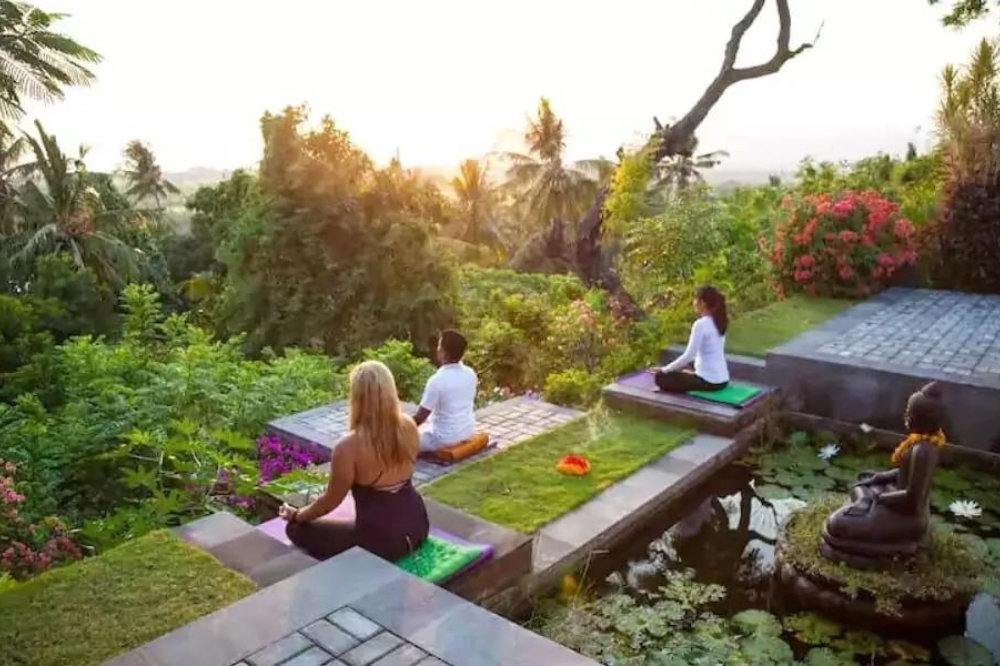
  • The Importance of Breath in Yoga: Techniques for Deepening Your Practice

    The Importance of Breath in Yoga: Techniques for Deepening Your Practice

    When we hear about yoga, the first thing that comes to mind is posture and various yoga asanas, but wait, there is much more to it. Yoga is an ancient practice that people have been practicing for tens of thousands of years that goes beyond just physical postures. Many view yoga as a holistic approach to their overall well-being that aims to create harmony between the spirit, body, and mind.

    A core concept in yoga is called prana, which is a subtle energy that is believed to be the life force that generally flows through all living things. Our breath plays a crucial role in practicing yoga and acts as a bridge between the physical and other subtle aspects of our being. If we get connected with our breath continuously, then we will be able to unlock a wealth of benefits.

    On the physical level, breathwork can benefit us by deepening our stretches, improving our core engagement, and optimising the overall energy flow. Moreover, focusing on breath can also help us calm our mind and reduce stress while cultivating a sense of mindfulness and presence. To summarise it, breath is the ultimatum to achieve anything through yoga and to know our full potential.

    Why is breath important in yoga?

    Have you ever paid attention to the first reaction anyone has when something goes wrong with their body during a practice? You will first be told to control and hold your breath, as it is so crucial in yoga, and there are two main reasons behind it:

    A. Connection Between Breath and Movement (Asanas):

    • Deepening Stretches and Improving Body Awareness: As we inhale, we can expand our body and lengthen it in a pose. When we coordinate our breath with the movement during the practice, it enables us to access deeper stretches and improves our overall awareness of the body, which allows us to achieve a more targeted and effective yoga practice.
    • Optimising Energy Flow Throughout the Body: In yoga, it is believed that the breath is the optimal energy that controls the overall flow of prana, which is the life force within the body. When you focus on smooth and even breaths, it helps you optimise the overall energy flow and results in improving your practice while potentially promoting overall well-being.

     B. Breath and Mental Well-Being:

    • Calming the Mind and Reducing Stress:When we begin to focus on breath, it naturally draws all our attention inward, which helps in quitting the mind and reducing the chatter of thoughts. This practice can bring a sense of calmness and help reduce stress levels.
    • Cultivating Presence and Mindfulness: Focusing on one thing helps us with concentration in another. When we pay close attention to the flow of breath in our body while both entering and leaving, it creates a sense of presence of mind in the present moment and mindfulness. Through this, we can be fully engaged in the moment of activities, both on and off the mat.

    Breath Control Techniques for Yoga

    Now that we know how powerful and impactful breath is in yoga, it’s time to explore some specific techniques that will help you enhance your overall effectiveness:

    A. Ujjayi Breathing (Victorious Breath):

    This breathing technique, often referred to as ocen breathing, is one of the most commonly used and popular forms of breathing used in pranayama.

    Technique:

    • Keep your mouth closed and start inhaling and exhaling the breath.
    • Constrict your throat throughout the movement.
    • Create a soft hissing sound with your breath, more like snoring.
    • Control your breath with your diaphragm.
    • Expand the abdomen during inhalation and engage the core while drawing the breath in.
    • Keep the enhaling and exhaling of equal duration.

    Benefits:

    • Promotes the overall focus during the activity.
    • It helps in maintaining a steady rhythm.
    • Strengthens the core and stabilises the body.
    • Helps in generating internal heat, aiding in detoxification.
    • Releases tension from the body.

    B. Dirga Pranayama (Three-Part Breath):

    Dirga pranayama has a deep meaning, which translates to expanding the breath for a prolonged period of time. Dirgha, which means deep or prolonged in Sankrit when combined with pranayama, reflects this meaning.

    Technique:

    • Firmly inhale and go for three-step breathing.
    • For the first step, inhale through the nose, let the belly expand, move breath to the lungs, and exhale.
    • For step two, do the same, but add the breath to the rib cage as well, and then breathe out.
    • For step three, move one step forward by adding breath to your upper chest as well, and then exhale.
    • During exhalation, ensure to squeeze the belly until it is empty.
    • Reverse the sequence while exhaling slowly.

    Benefits:

    • Helps in relaxing the body and mind.
    • Promotes a sense of calm and well-being.
    • Improves overall oxygen intake and lung capacity.
    • Strengthen the digestive system and improve the immune system.
    • Helps in reducing hypertension and high blood pressure.

    C. Kapalbhati (Breath of Fire):

    Kapalbhati is an energising technique also known as the breath of fire, which also translates as skull-shining breath.

    Technique:

    • Sit comfortably on the mat while keeping your spine erect.
    • Keep your hands on your knees while your palms open upward.
    • Take a deep breath in and focus on your exhaling.
    • During exercise, pull your nevel back to the spine.
    • Relax the navel and abdomen, and let your breath flow into your lungs automatically.
    • Do it 20 times to complete one round of kapalbhati.
    • Relax and do two more rounds of it.

    Benefits:

    • It helps in calming and uplifting the mind.
    • It clears the subtle energy channels in the body.
    • Helps in losing weight while increasing the metabolic rate.
    • Enhances overall lung capacity and makes them stronger.
    • Aid in detoxification and stimulate the digestive system.

    Important Note:

    While these breathing techniques are suitable for better breath control, it is essential to consult and take help from a qualified and skilled yoga teacher and perform them under their guidance before beginning the practice on your own. Especially for those who are dealing with some health concerns.

    Tips for Deepening Your Breathwork

    Take your breathwork to the next level and include these tips in your practice to unlock greater benefits:

    Observe Your Natural Breath Patterns:

    Before choosing any specific breathing technique and diving into the pose, take some time outside and simply observe the pattern of your natural breathing. You need to take into consideration the depth of it, its speed, and the rhythm it has.

    Pay attention to whether it is rapid, shallow, deep, or slow, and utilise these awareness and observance to build the foundation for making conscious changes in your practice.

    Lengthen Your Exhalations:

    Many people don’t realise it, but it has become their tendency to take shallow and short breaths. For those, it might be difficult to hold the pose, and they would have to try lengthening their exhales.

    So when you exhale, try squeezing out all the stale air from your lungs and stretching your stomach till it gets empty. This technique will naturally create the space for deeper and deeper inhalations.

    Coordinate breath with movement:

    As we discussed earlier, breathing works as a bridge between the stillness and movement of the body. To have great coordination, you need to try to synchronise your breath with each movement during your practice.

    When you lengthen your body and expand in a pose, inhale. And during the fold and contraction, exhale. This will help you create a smooth flow and enhance the benefits of both breath and posture.

    Practice breathwork outside of yoga sessions:

    When benefits can be taken off the mat, then why not practice? Yes, to have better control and unlock your full potential, practice these techniques throughout the day whenever you need a moment of focus or feel stressed.

    Breathing in our body impacts almost everything. So whenever you feel different, strain, or need concentration, even a few minutes of mindful breathing can make a big difference in your overall well-being.

    Conclusion

    To summarise, we have explored all the benefits you can get and the essentiality of mindfulness in yoga practice. Breath is the bridge without which you cannot connect the physical and subtle aspects of your body together. And when you consciously connect with it, you unlock the wealth of benefits it adds to your everyday life.

    Both mental and physical well-being are important, and deep and mindful breaths help enhance both. While its physical benefits include improved flexibility, core engagement, and overall energy flow, on the other hand, it also has a profound impact on mental well-being by reducing stress, bringing focus, and relaxing the mind.

    But while brinthing brings in all the benefits, consistent practice is the key. All you need to do is integrate the breathwork into your yoga routine. Observe your breathing pattern and experiment with different breathing techniques. Remember, in the journey of yoga, breath is your guide. With focus, dedication, consistency, and exploration, you can take advantage of the complete benefits of your practice and get ahead in your well-being.

    Get in Touch:
    Best Yoga Teacher Training In Bali | 100 Hour Yoga Teacher Training In Bali | 200 Hour Yoga Teacher Training In Bali

  • Experience the Essence of Bali: Yoga Teacher Training with Luxury Accommodation and Cultural Immersions

    Experience the Essence of Bali: Yoga Teacher Training with Luxury Accommodation and Cultural Immersions

    While practicing yoga, how do you feel about the weather? Which weather and what type of ambiance suit you more? Well, when we talk about the perfect environment for practicing yoga, we imagine ourselves surrounded by emerald rice paddles with a gentle smell of frangipani flowers in the air. Along with this, the rhyming sounds of ocean waves offer the perfect background music for the class. Sounds amazing, right? That’s exactly what you get in Bali, which is also referred to as the Island of Gods.

    For centuries now, Bali has been the go-to destination for yoga practitioners who look for a place to not only deepen their yoga practice but also connect them with their own selves and this holistic discipline. And Bali Yogshala, which is situated in the heart of this island, provides you with the opportunity to begin your yoga journey and make a change in your daily lifestyle and yourself.

    Our exclusive range of teacher training programmes in Bali offers a combination of various activities, including intensive yoga training, great cultural experiences, and luxurious accommodations, all in a package that suits you well. Our programmes are designed to offer you complete relaxation during your stay while letting you discover the rich culture of this island.

    Intensify your yoga practice in the heart of Bali

    Yoga teacher training programmes in Bali are designed in a way to take you on a journey where you can learn, explore, understand, and experience the various aspects of yoga. Here’s what you can expect from these programmes:

    Structured Learning:

    There are different teacher training programmes that we offer in Bali that span 100 hours, 200 hours, and 300 hours, respectively. Based on your choice of YTTC, we offer you the learning of yoga to build the foundation of your practice, along with the principles of philosophy, alignment principles, anatomy, and teaching methodology.

    Diverse Yoga Styles:

    Here, you can explore the various styles of yoga, from Hatha to Vinyasa to Yin. This way, you can choose the one yoga practice that resonates best with you and that you desire to master in order to become a skilled yoga teacher (if this is your goal). This also helps you gain the versatility through which you will be able to cater to the needs of various students in the future during the class.

    Experienced Guidance:

    Learning from people who have experience is what makes this more special, and they not only teach you through theoretical knowledge but also add up their own experience in teaching to make it even more realistic and beneficial for you. At Bali Yogshala, we have skilled yoga gurus who not only have mastered their craft but also have a deep understanding and knowledge of the rich history and philosophy of yoga.

    Traditional Roots:

    Yoga teacher training programmes in Bali go beyond just physical yoga practice and take you to the traditional philosophy. This will help you understand better the hows and whats of this practice. You will also explore the eight limbs of Ashtanga yoga and know the connection between the body, mind, and soul.

    Refine in Serenity:

    These programmes let you practice in a stunning and calm environment. You can begin your day with flowing sun salutations in open air with the relaxing sound of waves and lush rice paddy fields alongside. The beauty and serenity of Bali are perfect to not only amplify your practice but also to have a deep connection within.

    Luxurious Comfort: Elevate Your Yoga Experience in Bali

    Comfort is something that attracts us and motivates us to stay somewhere, and that’s exactly what we offer in Bali. We offer a comfortable stay with a touch of luxury to nurture your well-being and make your visit to Bali memorable.

    Indulge in unparalleled comfort:

    After a hectic day filled with intense practice and various activities, you must be drolling to unwind and relax in privacy. At Bali Yogshala, we offer both shared and private rooms with attached spacious bathrooms with showers to help you melt away all the lingering tension from your body and mind and give you time and space to gain your energy back.

    Private Oasis for Relaxation:

    Most of our rooms feature private balconies and open terraces, where you can relax in private, enjoy your me-time, or connect with nature and practice mindfulness. You can also picture yourself sipping your herbal tea in the morning, experiencing the warm sunshine from your room, or meditating in the gentle sounds of the tropical landscape of the island.

    Luxury: A Catalyst for Transformation

    Luxury is not a necessity but is an additional support for our yoga journey that makes it more relaxing. A good night’s sleep in a comfortable bed allows individuals to approach each day with new energy and focus.

    Additionally, spacious areas are perfect to create a space for group discussions and to build the connection between all individuals in a class. Ultimately, it just enhances your overall living experience and helps you get yourself ahead in your practice with improved focus and an energised body.

    Know About Balinese Culture: A Journey Beyond the Asana

    Our YTTC is not only about yoga and practice, but it goes beyond that, even far beyond the mat. Yes, you can learn about the rich culture of Bali and explore this place on your own to understand its rich history and create memories that last a lifetime.

    Unveil the sacred:

    The evenings of each day of our programmes are reserved for guided visits to various magnificent temples on this island, where you can learn about the spiritual lifeblood of Bali. You can learn about the traditional ceremonies and also learn about the Hinduism culture in Bali and the significance of offerings.

    Witness the Art of Movement:

    Balinese dance is a fun activity to explore. You can attend live performances of the Kecak dance, which is famous due to its energetic chanting, or the graceful Legong dance. Getting yourself to the different culture not only helps you build a connection but also provides you with a visual feast and a connection between the expression, body movements, and storytelling they have through their dance form.

    Embrace the creative spirit.

    Do you love art? Then this place is perfect for you, as you can enroll in different art and craft workshops in Bali. You can know and learn the art of Bati creation, weaving techniques, or wood carving that are used to craft traditional offerings. These workshops are an excellent opportunity to get hands-on experience in these practices.

    A Transformational Journey: More Than Just Yoga Teacher Training

    Our YTT programmes are more than just a way to get your professional certification as a teacher; they are a journey and not a destination that takes you somewhere deeper in understanding and practice to transform you as a person.

    Evolve as a Yoga Practitioner:

    If you are a beginner or a yoga practitioner, our YTTC programmes help you refine your yoga practice. Through intensive training, various classes, and personalised guidance, you can learn in depth about the yoga philosophy and develop the major skills you need as a teacher to confidently guide others in their journey too.

    Embrace Self-Discovery:

    Yoga is not about the physical practice alone, and as you go much deeper in this practice on a level to help you teach others too, you get to walk on a path that takes you to self-discovery. These programmes create a space for reflection and allow you to fully know your inner self and become aware of your potential.

    Cultivate Mindfulness:

    Yoga is a mindful practice, and when we combine it with the serene culture and calm environment of Bali, it fosters a deep sense of mindfulness within. This will help you cultivate present-moment awareness and manage your stress effectively. You will also be able to approach life with better clarity and a greater purpose.

    Find Inner Peace:

    Peace of mind is a necessity in our lives, as it is the only approach that leads to everything, and through the programme, you will be guided towards achieving it. Practices like pranayama and meditation techniques are great for managing your emotions, radiating peace, and achieving calmness in all aspects of your life.

    More than a certification:

    In this expansive world, these programmes are a small investment in our overall well-being. After a successful completion of a course, you will receive a yoga certification, but is that it? No, what you will have is a transformative perspective and a new self that knows more and will resonate throughout your life.

    Conclusion: What You Can Have in the Paradise of Bali

    We have explored and let you experience the immense benefits this beautiful place has to offer. Now you can imagine yourself returning from our Bali Yogshala’s teacher training programs, not only as a skilled teacher who is ready to begin his journey as a teacher but as a transformed individual.

    You will have a deepened practice under the strict guidance of our skilled yoga teachers and will master diverse styles while gaining an understanding of yoga philosophy. Additionally, the luxurious accommodations at our school will provide you with a haven for relaxation and privacy.

    But apart from all of these, the true experience and memories lie in the immersive cultural experience you will have on this island. When you explore the ancient temples, witness the different dance performances, and engage yourself with local communities, you will appreciate the root of yoga and the deep connection it has with Balinese life.

    After all, if we conclude about the teacher training programmes in Bali that we offer in our school, Bali Yogshala, then it is more than just a teacher training programme, but a life-changing journey that will leave you transformed forever. So what are you still waiting for? Are you ready to be transformed, both physically and mentally? Then don’t just hold on. Visit our website today, choose the YTTC programme that best suits you, and take the first step towards your goal.

    Get in Touch:
    Best Yoga Teacher Training In Bali | 100 Hour Yoga Teacher Training In Bali | 200 Hour Yoga Teacher Training In Bali