Tag: pranayama

  • Unlock the Secrets of Hatha Yoga: A Positive Journey for Beginners

    Unlock the Secrets of Hatha Yoga: A Positive Journey for Beginners

    Yoga is an ancient and dynamic practice that has its roots in India, and among a wide range of different yoga styles, Hatha yoga is considered the beginning and foundation for modern yoga styles. The word hatha has a meaning infused, which translates as “ha” meaning sun and “tha” meaning moon in Sanskrit. It showcases and puts much value in the concept of balance, which represents using opposing energies within us in union.

    If you are a beginner and are exploring your way into yoga, then practicing Hatha yoga can bring you a number of great benefits. It includes a subtle mix of various asana practices and mindful breathing techniques (pranayamas), which not only improve your flexibility but also strengthen your body and enhance your overall well-being. While regular practice can help with a lot of things, including stress reduction and fostering inner peace,. 

    So if you are curious about how yoga can enhance and improve the quality of your life and how much potential it has for changing your life, then Hatha yoga is the perfect to begin the oracle.

    Hatha Yoga

    The Essentials of Hatha Yoga Practice

    Asanas (Postures): The Foundation of Movement

    Asanas, or the physical postures, are the core aspects of Hatha yoga, and in this section, we will discuss exploring and maintaining some fundamentals to have an effective and safe practice.

    Alignment and Breathwork: The Guiding Principles

    Before beginning any specific posture, you need to keep these two things in mind:

    Alignment:

    Proper alignment is the only way to save yourself from any injury or mishap during the practice. While ensuring safety, they also maximise the benefit of each pose. Choose a qualified and experienced yoga instructor, as it will be helpful to provide you with the correct guidance on optimal alignment for each asana.

    Breathwork (Pranayama):

    In yoga, breath is considered a powerful bridge between mind and body. When you coordinate your body movements with your breath, it brings focus and control to your practice. It’s best to focus on inhaling while you open your body and exhaling as you release the tension.

    Beginner-Friendly Asanas:

    Let’s take a quick note on some basic poses, categorized by how they function:

    Standing Poses (Balance and Strength):

    Tadasana (Mountain Pose):
    • Stand tall with your knees straight.
    • Keep your feet hip-width apart.
    • Ground through your soles.
    • Stretch your arms up and stand on your feet.
    • Come down, stand at your feet, and put our hands down. Repeat a few times.
    Vrikshasana (Tree Pose):
    • Stand straight and tall to balance your body on one leg.
    • Hold the other leg and place it on the inside of your thighs.
    • Join both your palms in a Namaste and bring it to your chest.
    • Hold the pose and breathe steadily.
    Benefits of Standing Poses
    • It helps reduce the overall body weight.
    • Strengthen the ankles, hips, and chest.
    • Improves digestion and concentration.
    • It calms the mind and releases stress.
    • Stretch the thigh muscles and abdominal organs.

    Forward Bends (Flexibility and Inner Peace):

    Balasana (Child’s Pose):
    • Kneel down on the floor.
    • Keep your feet placed on the mat.
    • Take a breath and spread your knees to the length of your hips.
    • Keep your shoulders on your knees.
    • Extend your hands straight upwards and rest them on the mat.
    Uttanasana (Standing Forward Fold):
    • Stand straight on your feet and keep your spine straight.
    • Balance your weight equally on both legs.
    • Keep your arms over your head and motion your breathing while inhaling.
    • Enhale, stretch your body, and hinge at the hips.
    • Bend forward completely with a flat back.
    • Fold your body down towards your feet.
    Benefits of forward-bending poses:
    • Strengthen the thighs, knees, and legs.
    • It helps reduce tension in the lower back.
    • It helps in stretching the back, spine, and hips.
    • It calms the mind and balances the nervous system.
    • Improves the digestive system.

    Twists (Detoxification and Digestion):

    Marjariasana (Cat-Cow Pose):
    • Sit in the table-top position.
    • Keep your palms, knees, and toes on the floor.
    • Engage your core and draw your belly button inward.
    • For the cat pose, arch the back and drag your belly towards the mat.
    • Hold your breath and feel the stretch in your back and core.
    • For the cow pose, exhale and round the back towards the ceiling.
    • Tuck your chin to the chest while engaging your core.
    • Feel like you are pushing the floor away from you.
    • Hold your breath and feel the stretch in your neck and shoulders.
    Vakrasana (Seated Twist):
    • Sit on the floor and extend your legs in front.
    • Engage your core and keep your spine erect and straight.
    • Extend your arms out to the sides while keeping your palms facing down.
    • Fold your right leg and bring your foot outside of your left thigh.
    • Bring your left arm behind you while keeping the right one on the left knee.
    • Maintain breathing, and repeat it on the other side.
    Benefits of Twists:
    • Improves muscular balance and coordination.
    • It calms the nervous system.
    • Creates space in the hips, shoulder, and spine.
    • It helps relax the muscles around the spine.
    • Aid in decompressing the spinal column.

    Sun Salutations (Surya Namaskar):
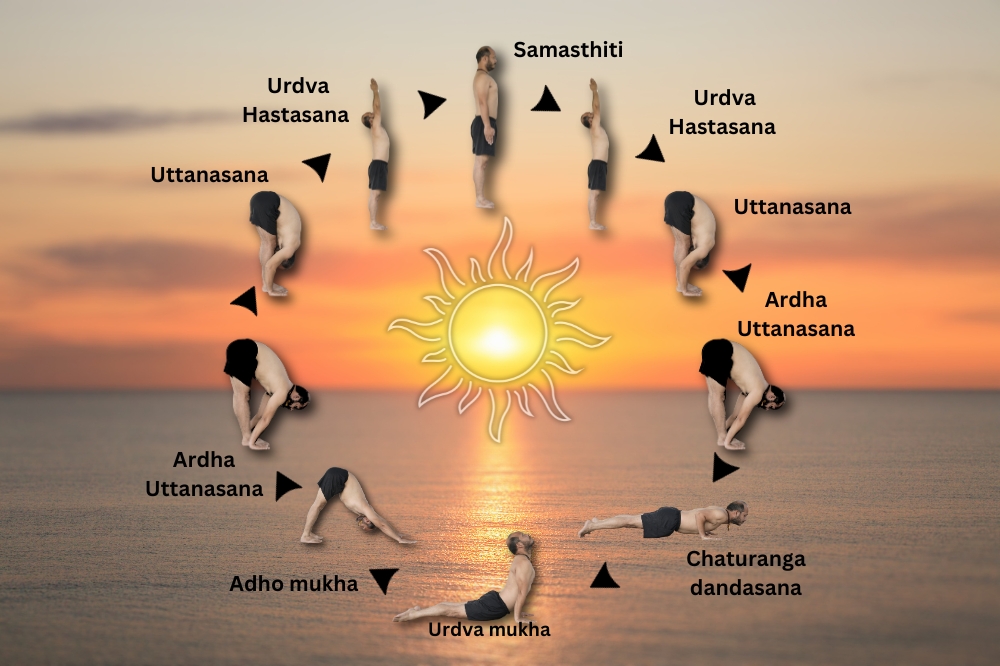
    Hatha Yoga - Surya Namaskar

    Sun salutations are the foundational sequences that can be performed first or at any time. These sequences link a series of several pictures together in a flowing movement that is synchronised by breath. They are perfect for a complete body workout and can be practiced at various speeds depending on the exercise level of the individual or person doing it.

    These are the beginning yoga poses in Hatha yoga, but as you progress in your practice, you will get to explore a wide range of asanas that will further enhance your flexibility and practice.

    Pranayama (Breathing Techniques): The Power of the Breath

    Hatha Yoga - Pranayama

    Breath plays a vital role in yoga practice, as it is considered the life force. When you understand the connection our body has between the breath and the movements we do, it allows you to control your body’s energy (prana) and enhance and improve your overall practice.

    Simple breathing exercises:

    Ujjayi (Victorious Breath):

    In this breathing technique, you need to constrict your throat slightly while inhaling and exhaling, creating a soft, hissing sound. This breathing technique focuses mainly on the mind and helps in energising the body.

    Dirga Swasam (Three-Part Breath):

    As stated by the name, you are required to divide your breath into three parts. First you will fill your lower belly, then you will move to the mid-ribs and, in the end, the upper chest. And then you will have to exhale in the reversing sequence. The breath brings peace and promotes overall relaxation by calming your nervous system.

    Benefits of Mindful Breathing:

    Mindful breathing techniques help you build focus and create a sense of inner peace and well-being. When you focus solely on your breathing, it helps in distracting your mind and reducing stress while improving overall concentration and boosting the sense of calmness within.

    Getting Started with Hatha Yoga: The Essentials You Need

    We have already discussed the asanas and postures and what you will learn. But still, there might be many questions coming into your mind about beginning the class. This section will give you the knowledge to navigate your first class and make you feel comfortable while stepping onto your yoga mat.

    A Breakdown of the Class Structure:

    Every Hatha yoga class follows a well-defined set of structures that allow you to form practice and ease into the practice with rhythm. Here is what you can expect:

    • Warm-up (5–10 minutes): You will begin with some gentle movements and stretches to prepare your body for more activeness and asana practice.
    • Asana Practice (30–45 minutes): This is the essential part of the class, where you will flow both physically and mentally through a sequence of postures that are designed specifically to improve overall bodily strength, flexibility, and balance.
    • Cool-down (5–10 minutes): After some heavy movements, you will go through some calming stretches and postures to help your body get calm and transition from exertion to relaxation.
    • Relaxation (5–10 minutes): The class will end with a relaxation pose like Savasana (corpse pose), which is the final stage that allows your body and mind to completely relax and integrate the practice.

    Respecting Etiquette:

    Respect and mindfulness are essential elements to keep in mind while practicing yoga. Here are some helpful points to remember in order to maintain an inclusive and positive environment in the classroom:

    • Arrive early: Punctuality is the key; try to arrive a few minutes early for the class. This will allow you adequate time to settle in, resolve your query, and find a comfortable spot.
    • Maintain personal space: While keeping a focus on your practice, do not forget to be aware of your fellow yogis too. Maintain a respectful distance between the mats for better focus.

    Choosing Your Perfect Class:

    For individuals with different levels, there are a variety of Hatha yoga class types, each catering to the specific needs of individuals. Here is how you can find the right fit for you:

    • Beginner Hatha: These classes are designed for newcomers and teach you the fundamental postures of Hatha Yoga with clear instructions and modifications for beginners.
    • Gentle Hatha: These classes are beneficial for those individuals who are going slow in their practice with some limitations, as these classes focus on relaxation and general stretches only.
    • Restorative Hatha: These classes utilise props for support and include advanced postures for passive stretching and deep relaxation.

    Finding a Qualified Instructor:

    A supportive and qualified instructor plays a vital role in guiding you safely and effectively in your yoga journey. It is essential to look for someone with years of experience in teaching Hatha Yoga.

    Also, look for a yoga school that is registered with the Yoga Alliance and has a good reputation for teaching and conducting classes, such as Bali Yogshala

    Preparing for Your First Class:

    Don’t be nervous; just be mentally prepared, and it can ease your first-class jitters. Here’s what you can pack and bring to the class:

    • Comfortable Clothing: Wear loose clothes that allow you to move freely. You can also go for natural fabrics like cotton.
    • Yoga Mat: A yoga mat is a one-time investment, so get one that provides ample support and cushioning.

    Conclusion:

    As you begin your journey with the practice of Hatha yoga, remember the array of benefits it offers. Do not forget to maintain a regular practice, as it is the key to a flexible and strong body with improved balance. But apart from its physical aspects, it can also be a powerful tool for various mental issues, which include stress management, inner peace, and relaxation. The mindful breathing techniques this yoga offers will not only benefit you during the class but can also help you become calmer and more focused in your everyday life.

    The wait is over. Just pack your bag, get your mat, and begin learning Hatha yoga now. There are countless resources available to you to support you on your journey. Many reputable yoga studios, such as Bali Yogshala, offer introductory classes to provide you with a wealth of information and proper guidance and inspiration. So take the first step and begin your practice while discouraging the immense benefits of this beautiful practice.

    Get in Touch:
    Best Yoga Teacher Training In Bali | 100 Hour Yoga Teacher Training In Bali | 200 Hour Yoga Teacher Training In Bali
  • From Beginner to Guru: What to Expect During Your Yoga Teacher Training Journey

    From Beginner to Guru: What to Expect During Your Yoga Teacher Training Journey

    We go through a series of stages of confusion and doubt before choosing anything, and when it comes to our career, it becomes essential for us to analyse and learn everything. Many of you are also thinking about choosing to be a yoga teacher, but you might be confused about the path or way from beginner to yoga guru and what you should expect from your yoga teacher training journey

    The journey from a student to a skilled yoga teacher consists of various learnings, adventures, and hard work, but it is sure to change the way of living, thinking, and working. It is a beautiful journey from a curious and raw learner stepping for the first time on the mat to a skilled and confident yoga teacher who knows how to teach as well as help others become yoga teachers and guide them in their journey too. This career path is not only about learning yoga but also about developing your personality.

    To clear all your doubts and help you make a firm decision about your career, we have curated this blog, which provides a comprehensive guide that reflects on all the essential parts of the journey from being a beginner to a skilled yoga guru. Read to learn more.

    Before you begin: Yoga teacher training requirements

    Firstly, before beginning your journey, you must know and understand the dynamics of what you will need to have before joining the course. While there is no such strict requirement for anyone to become a yoga teacher, having some basic things, such as a regular yoga practice with good physical fitness, can help you be better and will make your journey easier. 

    A consistent yoga practice will help you build a foundation and understand postures and alignments, while having good physical fitness will further enhance your learning and help you learn faster, get the most out of the programme, and avoid any potential injuries. It is a journey of self-learning, so coming with an open mind to learn all aspects will help you jump deeper into this immense pool of knowledge.

    The YTT Adventure: Yoga teacher training schedule, modules, and curriculum

    Yoga teacher training programmes are curated into two main subheads, which include intensive training programmes and part-time rams. Among which, intensive one includes a short span of time, usually a few weeks to some months, and requires complete attention from students and a full-time commitment, where they dedicate a full day to practicing.

    While a part-time YTT programmeme offers a more flexible approach to learning for all individuals with a busy and hectic schedule, it requires longer commitments of some months to a year and requires the candidate’s time over weekends or after office hours, but it takes a longer period for a student to complete this programme.

    Core Modules Covered in a Yoga Teacher Training Programme in Bali

    A YTTC covers a set of various learnings related to yoga to help you understand the basics and beginnings of this ancient practice and why it has been one of the most popular practices since ancient times.

    1. Asana (Posture) Practice and Alignment Principles:

    One of the most important teachings in YTTC is the asana practice, which is also known as the heart of yoga learning. Through your understanding of this, you can expect to:

    • Learn how to align properly for various postures, such as seated, inverted, standing, balancing, and restorative.
    • Learn to understand all the potential risks and benefits of postures that allow you to practice and teach yoga safely.
    • Explore the wide range of yoga styles, whether Hatha, Yin, Vinyasa, or any other styles, with their unique approach to practice.

    2. Pranayama (breathwork) Techniques and Benefits:

    Pranayama is a common yoga practice dating back to ancient times that includes control over our breathing. In this lesson, you can:

    • Learn and understand various breathing techniques, including kapalbhati and ujjayi.
    • Understand the technique on how to use pranayama to further enhance the yoga practice and guide the students through the same.
    • Learn about the physiological and energetic effects of this practice on the human body.

    3. Yoga Philosophy and History (including key yoga texts):

    This yoga learning includes the understanding and knowledge of intellectual teachings and the foundation of yoga, where you will likely encounter:

    • The key ancient yoga texts, such as the yoga sutras of Patanjali,.
    • The core principles of yoga and philosophy, which include the eight limbs of yoga and their ethical guidelines, are also known as Yamas and Niyamas.
    • Deep and detailed discussions over the history and evolution of yoga practice.

    4. Anatomy and Physiology for Safe and Effective Teaching:

    This learning will include the learning of the human body to offer safe yoga instructions to the students, which includes:

    • The essentiality of proper alignment during practice is to avoid any potential injury.
    • Modification of postures with respect to different bodies and limitations.
    • Learning of the musculoskeletal system that focuses on body organs such as bones and muscles and their function and importance in yoga postures.

    5. Teaching Methodology and Practice Observation:

    This includes learning how to teach effectively and efficiently, where you will learn:

    • The art of observation and implementation is where you learn from your teachers and apply that to your teachings.
    • Effective teaching techniques for better understanding and clear communication between a teacher and students.
    • The art of creating an inclusive and welcoming environment for all individuals around the world.

    6. Meditation: Quitting the mind and fostering focus

    Meditation is an ancient practice used to foster and enhance the overall focus, which will include:

    • Quitting the mind and thoughts and keeping them free to grab focus and concentration.
    • Teach techniques such as mantra meditation and mindful meditation to find peace within.
    • Use of breath to get control and divert our mind towards one goal.

    7. Ayurveda, the sister of yoga practice

    Ayurveda is the ancient Indian system that includes medicine and works as a comprehensive learning tool for yoga practice, which teaches you:

    • Understanding different doshas (body constitutions) and how they work.
    • Dietary recommendations to foster good health will make your yoga practice journey easier.
    • Self-care practices linked with Ayurveda promote a clean, healthy, and active body and mind.

    Beyond the Poses: Yoga Teacher Training Benefits and Personal Development

    Yoga teacher training is a life-changing journey, not only in the career aspect but also as an individual. Through deep and hard practice and adequate knowledge about yourself and the human body, you become a more self-aware peer, which results in a more confident, skilled, calm, and knowledgeable individual who is now ready to help others in their journey too.

    This programme lets you challenge your core areas and build your personality. It gives you the opportunity to transform yourself and grow, not just as a yoga teacher. but as an individual with a well-rounded personality and empowerment. Here are some key areas where you can see growth during your journey:

    1. A deepened yoga practice:

    A yoga teacher training course is a helpful tool to take your practice to another level. Through daily practice, you can refine your skills and explore the new variations, resulting in a deeper understanding.

    2. A sense of self-awareness:

    This practice also covers topics like yoga philosophy, which covers the understanding and learning of self, through which you will start to learn to observe everything around and inside you, which will dramatically change your way of living and thinking.

    3. Public speaking and confidence:

    One of the major areas lacking for anyone can be public speaking, but through various classes tailored to teaching techniques and with the help of constructive feedback, this course will help you master this practice and build confidence within you to lead a whole class.

    4. Building community and connection:

    YTTC brings a set of various individuals from around the world together in a class that are all passionate about yoga. Training with them, learning about their life experiences, and understanding their ways will help you create connections that last a lifetime.

    Challenges in the Journey: Yoga Teacher Training Difficulties, Overcoming Obstacles

    Achieving a goal was never easy. We have to push through all the boundaries and keep moving forward to achieve what we desire, as is the case with your YYT journey. It does come with a lot of physical and mental challenges, where the intensive and hard training will push your body while difficulty in something may create self-doubt. 

    However, you need to keep in mind that these challenges are usual, and this will open up the road to success towards your goal. All you need to do is keep moving no matter what comes to you, and in the end, you will see the results of all your hard work in your practice and personality. Here are some tips to overcome challenges during your journey:

    • Provide your body with healthy food to energise the muscles and mind.
    • Have adequate sleep and practice regularly to rectify the mistakes in postures and alignments.
    • Acknowledge your challenges, give yourself time to learn new things, and be kind to your body and mind.
    • Celebrate and embrace little achievements, and keep your mind away from negative thoughts.
    • If you’re stuck, don’t hesitate to seek support from your teachers and fellow students to help you with anything.

    The Road Ahead: Yoga Teacher Training, Certification, and Continuing Education

    When you’ve completed your YTTC, you will receive your teacher training certification, which will further open up the path for new opportunities. After which, you can enrol yourself in any course with open positions for teachers to convert your learning into practice. This task may require some proactiveness, as you can also use your connection to lend a hand as a teacher. 

    Knowledge is something that never ends, as it is like an ocean with no end. So it will be great to keep learning and gaining knowledge. Many studios, like Bali Yogshala, offer various retreats and programmes for teachers to foster their continuous education. If you have completed your 100-hour YTTC, you can also opt for the 200-hour YTTC and even the 300-hour YTTC through learning and practice to enhance your teaching skills further.

    Remember, gaining your certification is just the beginning; there is a whole life ahead, full of adventures. As you begin your journey as a yoga teacher, remember that it is a never-ending process of learning, growing, and sharing this pool of knowledge with others. Live the journey, witness the change, and guide others towards their goal too, as someone guided you towards yours.

    Conclusion:

    The yoga teacher training journey is nothing less than an adventure where you face challenges, go through them, learn from them, understand your potential, and, as a result, come out as a skilled and confident individual. This is a journey that goes far beyond just learning some postures and offers you a chance to look within, learn about yourself, and grow as a person from within and out.

    It gives you the opportunity to find your passion and ultimately become a skilled yoga teacher to help others with their journey too. So, what are you waiting for? Are you ready to change your way of life and become a yoga teacher? Choose your career path now.

    Get in Touch:
    Best Yoga Teacher Training In Bali | 100 Hour Yoga Teacher Training In Bali | 200 Hour Yoga Teacher Training In Bali