Author: Yogi Yashpal Rautela

  • From Beginner to Guru: What to Expect During Your Yoga Teacher Training Journey

    From Beginner to Guru: What to Expect During Your Yoga Teacher Training Journey

    We go through a series of stages of confusion and doubt before choosing anything, and when it comes to our career, it becomes essential for us to analyse and learn everything. Many of you are also thinking about choosing to be a yoga teacher, but you might be confused about the path or way from beginner to yoga guru and what you should expect from your yoga teacher training journey

    The journey from a student to a skilled yoga teacher consists of various learnings, adventures, and hard work, but it is sure to change the way of living, thinking, and working. It is a beautiful journey from a curious and raw learner stepping for the first time on the mat to a skilled and confident yoga teacher who knows how to teach as well as help others become yoga teachers and guide them in their journey too. This career path is not only about learning yoga but also about developing your personality.

    To clear all your doubts and help you make a firm decision about your career, we have curated this blog, which provides a comprehensive guide that reflects on all the essential parts of the journey from being a beginner to a skilled yoga guru. Read to learn more.

    Before you begin: Yoga teacher training requirements

    Firstly, before beginning your journey, you must know and understand the dynamics of what you will need to have before joining the course. While there is no such strict requirement for anyone to become a yoga teacher, having some basic things, such as a regular yoga practice with good physical fitness, can help you be better and will make your journey easier. 

    A consistent yoga practice will help you build a foundation and understand postures and alignments, while having good physical fitness will further enhance your learning and help you learn faster, get the most out of the programme, and avoid any potential injuries. It is a journey of self-learning, so coming with an open mind to learn all aspects will help you jump deeper into this immense pool of knowledge.

    The YTT Adventure: Yoga teacher training schedule, modules, and curriculum

    Yoga teacher training programmes are curated into two main subheads, which include intensive training programmes and part-time rams. Among which, intensive one includes a short span of time, usually a few weeks to some months, and requires complete attention from students and a full-time commitment, where they dedicate a full day to practicing.

    While a part-time YTT programmeme offers a more flexible approach to learning for all individuals with a busy and hectic schedule, it requires longer commitments of some months to a year and requires the candidate’s time over weekends or after office hours, but it takes a longer period for a student to complete this programme.

    Core Modules Covered in a Yoga Teacher Training Programme in Bali

    A YTTC covers a set of various learnings related to yoga to help you understand the basics and beginnings of this ancient practice and why it has been one of the most popular practices since ancient times.

    1. Asana (Posture) Practice and Alignment Principles:

    One of the most important teachings in YTTC is the asana practice, which is also known as the heart of yoga learning. Through your understanding of this, you can expect to:

    • Learn how to align properly for various postures, such as seated, inverted, standing, balancing, and restorative.
    • Learn to understand all the potential risks and benefits of postures that allow you to practice and teach yoga safely.
    • Explore the wide range of yoga styles, whether Hatha, Yin, Vinyasa, or any other styles, with their unique approach to practice.

    2. Pranayama (breathwork) Techniques and Benefits:

    Pranayama is a common yoga practice dating back to ancient times that includes control over our breathing. In this lesson, you can:

    • Learn and understand various breathing techniques, including kapalbhati and ujjayi.
    • Understand the technique on how to use pranayama to further enhance the yoga practice and guide the students through the same.
    • Learn about the physiological and energetic effects of this practice on the human body.

    3. Yoga Philosophy and History (including key yoga texts):

    This yoga learning includes the understanding and knowledge of intellectual teachings and the foundation of yoga, where you will likely encounter:

    • The key ancient yoga texts, such as the yoga sutras of Patanjali,.
    • The core principles of yoga and philosophy, which include the eight limbs of yoga and their ethical guidelines, are also known as Yamas and Niyamas.
    • Deep and detailed discussions over the history and evolution of yoga practice.

    4. Anatomy and Physiology for Safe and Effective Teaching:

    This learning will include the learning of the human body to offer safe yoga instructions to the students, which includes:

    • The essentiality of proper alignment during practice is to avoid any potential injury.
    • Modification of postures with respect to different bodies and limitations.
    • Learning of the musculoskeletal system that focuses on body organs such as bones and muscles and their function and importance in yoga postures.

    5. Teaching Methodology and Practice Observation:

    This includes learning how to teach effectively and efficiently, where you will learn:

    • The art of observation and implementation is where you learn from your teachers and apply that to your teachings.
    • Effective teaching techniques for better understanding and clear communication between a teacher and students.
    • The art of creating an inclusive and welcoming environment for all individuals around the world.

    6. Meditation: Quitting the mind and fostering focus

    Meditation is an ancient practice used to foster and enhance the overall focus, which will include:

    • Quitting the mind and thoughts and keeping them free to grab focus and concentration.
    • Teach techniques such as mantra meditation and mindful meditation to find peace within.
    • Use of breath to get control and divert our mind towards one goal.

    7. Ayurveda, the sister of yoga practice

    Ayurveda is the ancient Indian system that includes medicine and works as a comprehensive learning tool for yoga practice, which teaches you:

    • Understanding different doshas (body constitutions) and how they work.
    • Dietary recommendations to foster good health will make your yoga practice journey easier.
    • Self-care practices linked with Ayurveda promote a clean, healthy, and active body and mind.

    Beyond the Poses: Yoga Teacher Training Benefits and Personal Development

    Yoga teacher training is a life-changing journey, not only in the career aspect but also as an individual. Through deep and hard practice and adequate knowledge about yourself and the human body, you become a more self-aware peer, which results in a more confident, skilled, calm, and knowledgeable individual who is now ready to help others in their journey too.

    This programme lets you challenge your core areas and build your personality. It gives you the opportunity to transform yourself and grow, not just as a yoga teacher. but as an individual with a well-rounded personality and empowerment. Here are some key areas where you can see growth during your journey:

    1. A deepened yoga practice:

    A yoga teacher training course is a helpful tool to take your practice to another level. Through daily practice, you can refine your skills and explore the new variations, resulting in a deeper understanding.

    2. A sense of self-awareness:

    This practice also covers topics like yoga philosophy, which covers the understanding and learning of self, through which you will start to learn to observe everything around and inside you, which will dramatically change your way of living and thinking.

    3. Public speaking and confidence:

    One of the major areas lacking for anyone can be public speaking, but through various classes tailored to teaching techniques and with the help of constructive feedback, this course will help you master this practice and build confidence within you to lead a whole class.

    4. Building community and connection:

    YTTC brings a set of various individuals from around the world together in a class that are all passionate about yoga. Training with them, learning about their life experiences, and understanding their ways will help you create connections that last a lifetime.

    Challenges in the Journey: Yoga Teacher Training Difficulties, Overcoming Obstacles

    Achieving a goal was never easy. We have to push through all the boundaries and keep moving forward to achieve what we desire, as is the case with your YYT journey. It does come with a lot of physical and mental challenges, where the intensive and hard training will push your body while difficulty in something may create self-doubt. 

    However, you need to keep in mind that these challenges are usual, and this will open up the road to success towards your goal. All you need to do is keep moving no matter what comes to you, and in the end, you will see the results of all your hard work in your practice and personality. Here are some tips to overcome challenges during your journey:

    • Provide your body with healthy food to energise the muscles and mind.
    • Have adequate sleep and practice regularly to rectify the mistakes in postures and alignments.
    • Acknowledge your challenges, give yourself time to learn new things, and be kind to your body and mind.
    • Celebrate and embrace little achievements, and keep your mind away from negative thoughts.
    • If you’re stuck, don’t hesitate to seek support from your teachers and fellow students to help you with anything.

    The Road Ahead: Yoga Teacher Training, Certification, and Continuing Education

    When you’ve completed your YTTC, you will receive your teacher training certification, which will further open up the path for new opportunities. After which, you can enrol yourself in any course with open positions for teachers to convert your learning into practice. This task may require some proactiveness, as you can also use your connection to lend a hand as a teacher. 

    Knowledge is something that never ends, as it is like an ocean with no end. So it will be great to keep learning and gaining knowledge. Many studios, like Bali Yogshala, offer various retreats and programmes for teachers to foster their continuous education. If you have completed your 100-hour YTTC, you can also opt for the 200-hour YTTC and even the 300-hour YTTC through learning and practice to enhance your teaching skills further.

    Remember, gaining your certification is just the beginning; there is a whole life ahead, full of adventures. As you begin your journey as a yoga teacher, remember that it is a never-ending process of learning, growing, and sharing this pool of knowledge with others. Live the journey, witness the change, and guide others towards their goal too, as someone guided you towards yours.

    Conclusion:

    The yoga teacher training journey is nothing less than an adventure where you face challenges, go through them, learn from them, understand your potential, and, as a result, come out as a skilled and confident individual. This is a journey that goes far beyond just learning some postures and offers you a chance to look within, learn about yourself, and grow as a person from within and out.

    It gives you the opportunity to find your passion and ultimately become a skilled yoga teacher to help others with their journey too. So, what are you waiting for? Are you ready to change your way of life and become a yoga teacher? Choose your career path now.

    Get in Touch:
    Best Yoga Teacher Training In Bali | 100 Hour Yoga Teacher Training In Bali | 200 Hour Yoga Teacher Training In Bali
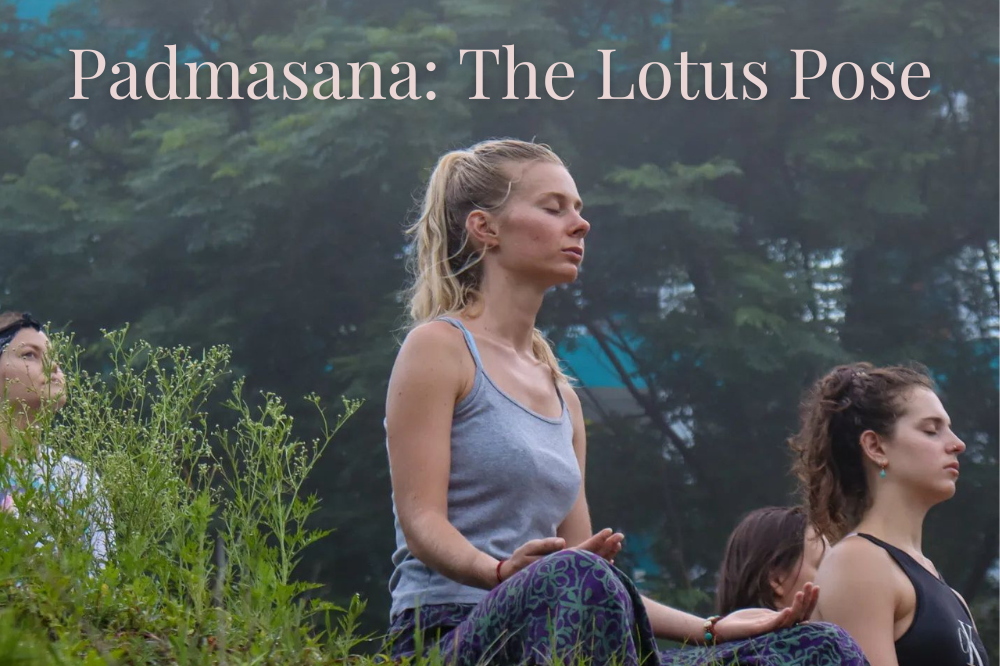
  • Padmasana: The Lotus Pose – Learn Yoga in Bali

    Padmasana: The Lotus Pose – Learn Yoga in Bali

    Historical and Spiritual Significance

    Padmasana has deep spiritual significance in various traditions, particularly in Hinduism, Buddhism, and Jainism. The pose resembles a lotus flower, which symbolizes purity and enlightenment. In Hinduism, it is believed that Lord Shiva and the meditative deity Gautama Buddha often sat in this posture. The lotus flower itself is a symbol of purity and spiritual awakening, growing beautifully even in muddy waters, representing the rise above worldly challenges.

    Physical Benefits of Padmasana

    Practicing Padmasana has numerous physical benefits:

    Improves Posture: Sitting in Padmasana aligns the spine, encouraging a natural, upright posture, which is beneficial for meditation and respiratory health.

    Enhances Flexibility: Regular practice of Padmasana stretches the knees, ankles, and hips, improving overall flexibility in the lower body.

    Promotes Circulation: This pose encourages blood flow to the pelvis, abdomen, and spine, promoting better circulation in these areas.

    Reduces Muscle Tension: Sitting in a cross-legged position helps reduce tension in the muscles, leading to relaxation and stress relief.

    Aids in Digestion: The pressure exerted on the lower abdomen can help stimulate digestive organs, potentially improving digestion.

    Mental and Emotional Benefits of Padmasana

    Beyond physical benefits, Padmasana is highly regarded for its mental and emotional advantages:

    Enhances Concentration: By promoting a stable and balanced posture, Padmasana helps in calming the mind, making it easier to concentrate and meditate.

    Reduces Anxiety and Stress: The meditative aspect of this pose helps in reducing anxiety and stress, fostering a sense of peace and tranquility.

    Balances Energy: It is believed that Padmasana balances the chakras, particularly the Muladhara (root) chakra and the Sahasrara (crown) chakra, facilitating the flow of energy throughout the body.

    Encourages Mindfulness: Practicing Padmasana encourages mindfulness and awareness of the present moment, enhancing mental clarity and emotional stability.

    How to Perform Padmasana

    Preparation:

    Sit on a mat with your legs stretched out in front of you. Ensure your spine is erect and your shoulders are relaxed.

    Entering the Padmasana Pose:

    • Bend your right knee and place your right foot on your left thigh. The sole of the foot should point upward, and the heel should be close to the abdomen.
    • Bend your left knee and place your left foot on your right thigh, ensuring both feet are as close to the body as possible.
    • Place your hands on your knees in a mudra (hand gesture) of your choice, such as Chin Mudra or Jnana Mudra.

    Maintaining the Padmasana Pose:

    • Keep your back straight and head aligned with your spine.
    • Close your eyes and take deep, slow breaths.
    • Stay in this position for as long as comfortable, gradually increasing the duration with practice.

    Exiting the Padmasana Pose:

    • Gently release your left leg, followed by your right leg, and return to a sitting position with your legs stretched out in front of you.

    Precautions and Contraindications:

    While Padmasana offers numerous benefits, it is important to approach it with caution, especially for beginners:

    • Avoid if you have knee or ankle injuries: Individuals with knee or ankle issues should avoid Padmasana or practice it under the guidance of an experienced instructor.
    • Do not force the pose: Forcing the legs into the position can lead to strain or injury. It is important to gradually work on hip flexibility before attempting full Padmasana.
    • Pregnancy: Pregnant women should consult with their healthcare provider before practicing Padmasana.

    Conclusion:

    Padmasana is a powerful pose that transcends physical exercise, offering profound mental and spiritual benefits. Regular practice of the Lotus Pose can lead to improved physical health, enhanced mental clarity, and a deeper sense of inner peace. As with any yoga practice, it is essential to approach Padmasana with mindfulness and respect for your body’s limitations.

    Learn yoga in Bali and experience the transformative power of Padmasana. Join us at Bali Yog Shala for a holistic journey into the heart of yoga.

    Get in Touch:
    Best Yoga Teacher Training In Bali | 100 Hour Yoga Teacher Training In Bali | 200 Hour Yoga Teacher Training In Bali

  • A Day in the Life of Yoga Teacher Training Student

    A Day in the Life of Yoga Teacher Training Student

    You are embarking on the best yoga teacher training in Bali with Bali Yogshala. You get to experience many wondrous moments. Apart from giving you enough knowledge and skills in yoga, we also help in your personal growth.

    As a student of Bali Yogshala, you get to explore numerous aspects of yoga, spirituality, nature, and surroundings. Now, if you want to know more on a day of Bali Yog shala’s yoga teacher training students, browse the blog further.

    Start with Vedic Hawan

    Yoga aspirants start their yoga teacher training in Bali at Bali Yogshala with Vedic Hawan or Fire Altar Ceremony. It is a traditional ritual rooted in Vedic tradition and holds great importance in the practice of yoga.

    With this ceremony, practitioners harness the sacred and purifying energies into their lives that help in their transformation, invoking blessings from the divine forces. The rhythmic chanting of mantras, the offering of ghee, herbs, and grains into the fire, and the collective prayers create an atmosphere of reverence and spiritual upliftment.

    Vedic Hawan serves as a powerful tool for purifying the mind, body, and spirit, fostering inner peace, harmony, and connection with the higher consciousness, making it an integral part of the yogic journey.

    Now, let’s move to the day of a yoga student during their yoga teacher training in Bali at Bali Yogshala.

    Pranayama

    A day at the best yoga training in Bali starts with a 30-minute morning Pranayama Session. It is a refreshing session that helps you in starting your day with clarity and vitality.

    With the rejuvenating practice of breathing techniques, practitioners stimulate energy flow, oxygenate the body, and calm the mind. Yoga students during the practice cultivate a sense of centeredness and presence.

    Morning sessions of pranayama prepare students to embrace the day with focus, balance, and inner peace.

    Ashtanga Practice

    After clearing the nostrils blockage and inhaling the fresh air, now it’s time for a 1 hour and 30 minutes session of Ashtanga practice during Bali Yogshala’s yoga teacher training in Bali.

    Ashtanga or Eight Limbs Yoga is a dynamic form of yoga which synchronizes breath with a step of postures. It generates internal heat that helps in detoxifying the body.

    The practice cultivates strength, flexibility, and mindfulness through a structured sequence of poses.

    Breakfast

    After 2 hours of practice, now it’s time to gain enough energy for your body. Bali Yogshala serves fresh and hygienic meals to its students by focusing on the nutritional value of the food.

    You all get to eat with your fellow mates where you don’t just eat the meals but also create memories with your friends.

    Yoga Philosophy

    You are attending the best yoga teacher training in Bali with Bali Yogshala, so, it is obvious that we don’t focus on a single aspect. Besides practical classes, we also emphasize theoretical classes.

    During the 1 hour class on yoga philosophy, students get to know about the ancient wisdom of various yogic texts such as the Yoga Sutras, Bhagavad Gita, and so on.

    Hatha & Vinyasa Practice

    After half an hour, students get prepared for Hatha & Vinyasa yoga practice. The practice of Hatha yoga focuses on static poses and breathwork. It goes with alignment, strength, and flexibility.

    On the other hand, the Vinyasa class creates dynamic movements and flowing sequences. The class will be 1:30 hour long where you learn under the guidance of veteran professionals and instructors.

    Lunch

    12:30 to 2 PM is fixed for a lunch break. Wash your hands and get ready to eat with your fellow mates. Eating together fosters social bonds and strengthens relationships.

    A hygienic Sattvic meal is provided to the students as it is considered the best for performing physical activities like yoga.

    Ayurveda & Chakra

    The yoga teacher training in Bali by Bali Yogshala includes a class on Ayurveda and Chakra where you get to know about them deeply.

    Ayurveda is an ancient and holistic medicinal science which originated from nature. It states that every cure is present in nature, we just have to follow some rules to stay fit and healthy.

    In a Chakras class, yoga aspirants explore the energy centers within the body, learning about their significance, functions, and associated practices such as meditation and yoga poses.

    Anatomy and Alignment

    The evening class of Anatomy and Alignment covers essential information on various aspects. It describes the mechanics of the human body, focusing on how bones, muscles, and joints interact in yoga postures.

    Through detailed instruction and hands-on exploration, students learn proper alignment principles to prevent injury, enhance performance, and deepen their practice.

    Understanding the anatomical aspects of each pose empowers practitioners to tailor their practice to their individual needs, promoting safety, efficacy, and mindfulness on the mat.

    Yin Yoga

    The 1 hour and 30 minutes class of Yin Yoga lets participants engage in a slow-paced practice that targets the deep connective tissues of the body, promoting flexibility, relaxation, and inner awareness.

    Yin Yoga offers a meditative experience that cultivates patience, mindfulness, and a sense of calm.

    Meditation

    The last class of the day will be 30 30-minute Meditation class. During this, students cultivate inner peace through guided meditation practices.

    Practicing this helps you let go of all the negative thoughts and frees your mind with boundaries. You feel relaxed with this.

    Dinner

    After all the practices, take your dinner with your friends and fellow mates and engage in a talkative session to create memories.

    Get in Touch:
    Best Yoga Teacher Training In Bali | 100 Hour Yoga Teacher Training In Bali | 200 Hour Yoga Teacher Training In Bali

  • The Ultimate Guide to Sattvic Living: Bali Yogshala’s Holistic Approach

    The Ultimate Guide to Sattvic Living: Bali Yogshala’s Holistic Approach

    It is said that our Food determines the overall health of the body. What do we eat? When we eat? How do we eat? All these things matter a lot. If you want to have a balanced life, then surely you need to balance your diet first. 

    The Verse 07 of Chapter 17 of the Bhagavad Gita states that,

    आहारस्त्वपि सर्वस्य त्रिविधो भवति प्रिय: |

    यज्ञस्तपस्तथा दानं तेषां भेदमिमं शृणु ||

    āhāras tv api sarvasya tri-vidho bhavati priyaḥ

    yajñas tapas tathā dānaṁ teṣhāṁ bhedam imaṁ śhṛiṇu

    Meaning: The food which is deal to all, even that is classified in three types and it matters a lot what we are taking. As food controls the mind and the mind regulates our activities. In the same way, sacrifices, austerities, and gifts are classified.

    As per Ayurveda, the food is classified based on their gunas, i.e.,

    • Sattvic which represents purity, health, harmony and well-being.
    • Rajasic which represents stress, anger, activity and restlessness.
    • Tamasic which represents dullness, laziness and lethargy.

    So, if you choose the Sattvic Diet, then you are gonna have the best lifestyle. Now, you want to know more about the Sattvic Diet, so don’t worry, just explore the blog and you will find more details on it.

    What is the Sattvic Diet?

    Sattvic Diet is the hidden gem of nutrition. It is not just a diet but a proper way of living. It helps in maintaining balance between the body, mind, and soul. As rooted in Ayurveda (the ancient Vedic Science), the Sattvic Diet emphasizes purity and mindfulness in the human body. The word is derived from the Sanskrit word, “Sattva” which means true or pure essence. 

    The food included in the Sattvic Diet is generally fresh, light, and easily digestible. Moreover, it also promotes spiritual awareness, mental clarity, and overall well-being. 

    As per Ayurveda, there are three doshas (also known as energies) in the human body, i.e.,

    • Vata (which relates to air and ether)
    • Pitta (which relates to fire and water)
    • Kapha (which relates to earth and water). 

    When you switch to Sattvic food, these doshas become balanced, which as a result maintains harmony within the body, mind, and soul. There are essential nutrients in the Sattvic type of food that encourage inner peace. Also, if you are practicing yoga, meditation, or other spiritual practice; then the Sattvic diet can help you a lot. If you are thinking that Sattvic Diet would be tasteless and boring, then you are completely wrong here, even it can be more tasty than other dietary options if prepared in the right way.

    Let’s move to the key principles of the Sattvic Diet,

    • Equipped with Nutritional Values

    Sattvic Food is free of artificial ingredients or additives. It is obtained from fresh and natural sources. Fresh fruits, vegetables, nuts, seeds, and whole grains are essential components, providing a wealth of vitamins, minerals, and antioxidants.

    • Clean Cooking Methods

    The preparation and consumption of the Sattvic Diet is done with a pure sense of purity and cleanliness. It is cooked and prepared in a hygienic environment and a clean method such as steaming or boiling and avoiding heavily processed or chemically treated foods.

    • Water and Herbal Teas

    Hydration is an important element in the Sattvic Diet, so pure water and herbal teas are recommended in this as it is believed to contribute to the cleansing function of the body.

    • Mindful Eating

    Practicing mindfulness during meals is a fundamental principle. This involves being present and appreciative of the food being consumed, fostering a deeper connection between the individual and their nourishment.

    Benefits of the Sattvic Diet

    • Better Mental Clarity

    Rich in fresh vegetables, fruits, and whole grains; the sattvic diet promotes mental clarity and focus of an individual. You can think clearly and let go of stress and tension from your mind while indulging in the Sattvic Diet.

    • Balanced Energy Levels

    Sattvic Food releases energy, which avoids the highs and lows associated with processed and artificial diets. This, as a result, helps in promoting a balanced and stable energy throughout the day.

    • Improved Digestion

    Sattvic Diet includes food that can be easily digestible such as fruits, vegetables, and whole grains. They also contribute to a healthy digestive system. 

    • Enhanced Spiritual Awareness

    Practitioners of the Sattvic Diet believe that consuming pure and natural foods helps elevate spiritual consciousness. The diet is seen as a means to cultivate a harmonious connection between the body and the spirit.

    • Detoxification and Cleansing

    As the Sattvic Diet emphasises fresh, pure and seasonal food rather than processed and heavy foods, so, it supports the body’s natural detoxification processes. It eliminates toxins from the body and promotes overall well-being.

    • Emotional Stability

    The Sattvic Diet encourages a mindful and balanced approach to eating, which is thought to positively influence emotional well-being. The avoidance of stimulants helps maintain emotional stability and a calm disposition.

    • Enhanced Physical Endurance

    The sattvic diet is rich in nutrition and so helps in improving physical stamina and endurance. The practitioners who are involved in physical activities or regular exercise should opt for the sattvic diet.

    • Optimized Weight Management

    The focus on moderation and the consumption of whole, nutrient-dense foods supports healthy weight management. The Sattvic Diet encourages individuals to eat according to their body’s needs, preventing overindulgence.

    • Improved Sleep Quality

    At present, many people are dealing with sleep disorders. One reason for this is stimulants and heavy food. The sattvic diet is balanced and promotes a natural circadian rhythm, facilitating restful and rejuvenating sleep.

    • Holistic Well-being

    Overall, the Sattvic Diet promotes a holistic approach to well-being, encompassing physical, mental, and spiritual aspects of health. By aligning with the principles of purity and balance, individuals may experience a profound sense of harmony in their lives.

    Sattvic Diet To Follow For Beginners

    Choosing the Sattvic Diet as a beginner means embracing a lifestyle that completely focuses on balance, purity, and mindful eating. Some of the guidelines, a beginner can include to integrate the Sattvic principles into your dietary habits:

    • Prioritize Fresh, Whole Food

    Include fresh fruits, vegetables, whole grains, nuts, seeds, and legumes. Also, go for seasonal and locally sourced food for freshness and nutritional value.

    • Mindful Eating

    How do you eat matters a lot. So, always chew food thoroughly, savour each bite, and pay attention to your body’s signals of hunger and fullness. While taking a meal, make sure that you are not distracted by television, mobile, or any such electronic devices.

    • Moderation is Key

    Eat in moderation, avoiding overindulgence. The Sattvic Diet encourages balance in portion sizes to support optimal digestion and energy levels.

    • Include Colors in Diet

    Including a variety of colors in your diet make it appealing and often signify diverse nutrient profiles, ensuring a broad spectrum of vitamins and minerals.

    • Hydrate with Pure Fluids

    Stay hydrated with pure water, herbal teas, and fresh fruit juices. Limit the consumption of caffeinated and sugary beverages.

    • Meals Timing

    Maintain a proper routine and try to eat at regular intervals. The Sattvic Diet often recommends lighter dinners and avoiding heavy meals close to bedtime.

    • Avoid Stimulants

    Steer clear of stimulants such as caffeine and heavily spiced foods, as they can agitate the mind and disrupt the sense of calm encouraged by the Sattvic lifestyle.

    • Explore Ayurvedic Principles

    Learn about Ayurvedic principles that complement the Sattvic Diet. Understand your dosha (body-mind type) to personalize your approach to nutrition and well-being.

    Remember, the Sattvic Diet is not just about the foods you eat but also about the mindset with which you approach your meals. As a beginner, gradually incorporate these principles into your lifestyle, allowing for a seamless and sustainable transition toward a more Sattvisc way of eating and living.

    Get in Touch:

    Best Yoga Teacher Training In Bali | 100 Hour Yoga Teacher Training In Bali | 200 Hour Yoga Teacher Training In Bali