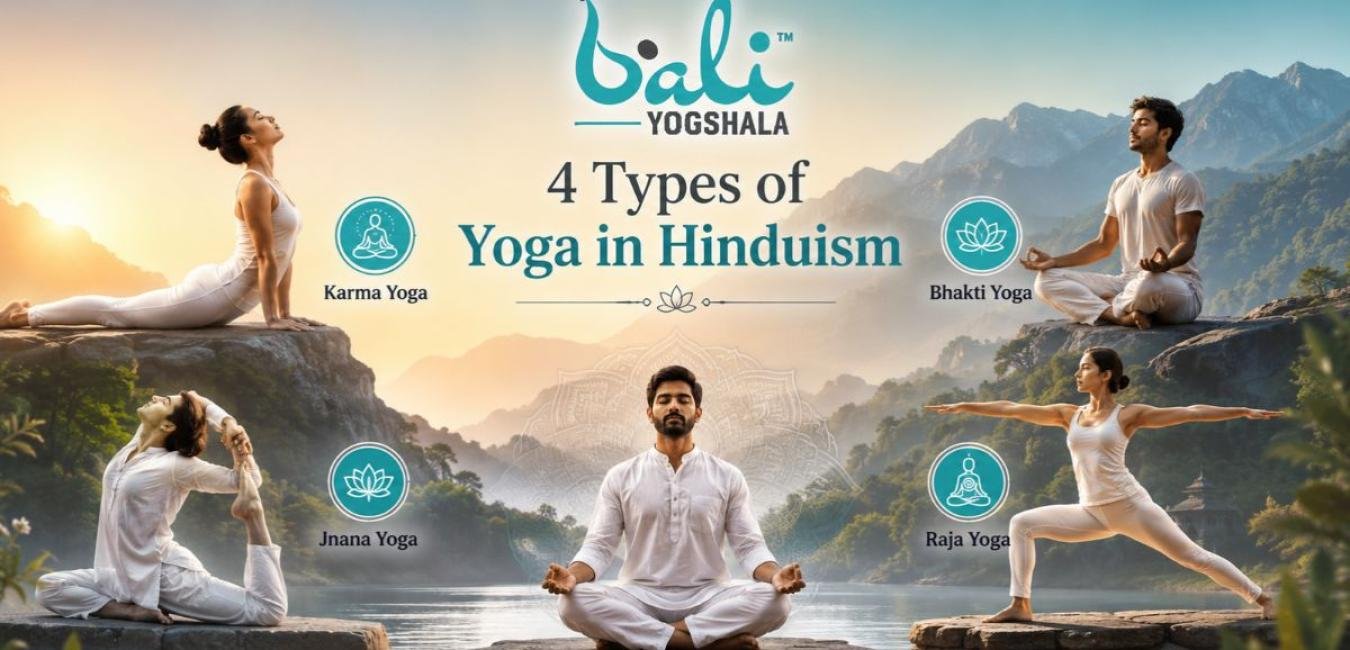
In Hindu philosophy, yoga does not just encompass the physical postures or exercises, but also encompasses the broader concept of yoga. It talks about a variety of spiritual practices for developing self-awareness, discipline, devotion, wisdom and liberation. The four popular ones are Karma Yoga, Bhakti Yoga, Jnana Yoga, and Raja Yoga. Both have various methods for promoting spiritual growth, and both have a common goal of helping the person gain insight into himself and his spiritual development. 4 types of yoga hinduism offers distinct paths for personal growth and spiritual realization.
Table of Contents
- What Are the 4 Types of Yoga in Hinduism?
- Understanding the Four Paths of Yoga
- 1. Karma Yoga – The Path of Selfless Action
- 2. Bhakti Yoga – The Path of Devotion
- 3. Jnana Yoga – The Path of Knowledge
- 4. Raja Yoga – The Path of Meditation and Self-Discipline
- How the 4 Yogas of Hinduism are Different?
- How the Four Paths of Yoga Lead Toward Spiritual Growth?
- Which of the 4 Types of Hindu Yoga Is Right for You?
- Conclusion
What Are the 4 Types of Yoga in Hinduism?
In Hinduism, there are four main paths of yoga: Karma Yoga (Yoga of Action), Bhakti Yoga (Yoga of Devotion), Jnana Yoga (Yoga of Knowledge), and Raja Yoga (Yoga of Meditations and Mental Discipline). These are elaborately discussed in various Hindu philosophies and yogic practices, including the Bhagavad Gita and the Yoga Sutra of Patanjali. These are not 4 distinct systems, and may be a combination of 2 or more systems for the practitioner. These two discuss alternate pathways to changing actions, feelings, intellect and mind. Yoga and karma interconnectedly emphasize selfless action and personal responsibility.
Understanding the Four Paths of Yoga
In this, there are four paths that start from different points of spiritual practice. Action and service are the central themes of Karma Yoga, devotion is the focus of Bhakti Yoga, discernment and self-knowledge are the focus of Jnana Yoga, and meditation and the mastery of the mind are the focus of Raja Yoga. The differences between these will help to illuminate the Hindu nature of yoga, which is far more than mere exercise. The 4 yogas of Hinduism provide structured paths to achieve spiritual liberation.
_1787551565.jpg)
1. Karma Yoga – The Path of Selfless Action
Karma Yoga is the path of Action for which there is no attachment to personal gains. One of the core teachings of Karma Yoga is that it is necessary to go into the work earnestly, but without being too attached to the outcome. Selfless service, ethical conduct, and dedication of one's actions to a higher purpose are important aspects of this path. The Bhagavad Gita teaches that the practice of action without the desire to get something in return is also an important spiritual practice. Practising yoga bhakti yoga deepens devotion and love toward the divine.
2. Bhakti Yoga – The Path of Devotion
Bhakti Yoga is a way of Love, devotion, and Surrender to the Divine. Practitioners can use prayer, worship, chanting, singing, remembrance or spiritual practice, or any combination of these, to show their devotion. The methods of worship as per Bhakti traditions may vary according to the deity or Bhakti of the Divine that is being worshipped. Focus is on building a sincere love and the conversion of emotional energy into spiritual love. The four paths of yoga accommodate different personalities, intellects, and inclinations.
3. Jnana Yoga – The Path of Knowledge
Jnana Yoga is about the search for spiritual wisdom, intelligence and knowledge of self and reality. The road is not just collecting information with the mind, but its reflections and self-inquiry into the thoughts or assumptions surrounding identity and the aim of gaining deeper insights. This is primarily a questioning of the nature of the self, consciousness, and ultimate reality. Advaita Vedanta has a special emphasis on the ability to differentiate between the fleeting individual and the permanent reality, and this is known as Jnana Yoga. Exploring various yoga paths helps seekers discover their true inner potential.
4. Raja Yoga – The Path of Meditation and Self-Discipline
Raja Yoga is often identified with the systematic development of the mind by steady meditation, concentration, ethicality, and other methods. The eight limbs of Yoga outlined in the Yoga Sutras of Patanjali include moral restraint, personal discipline, posture, breathing control, sense withdrawal, concentration, meditation and samadhi. The aim is to silence the chattering mind and achieve more control, stability and clarity. Today, the term Raja Yoga is sometimes applied more generally to a style of yoga, which focuses on meditation.
How the 4 Yogas of Hinduism are Different?
All four of these paths are connected to spiritual development, but all highlight other methods and human powers. Karma yoga is done by work, Bhakti yoga is done by devotion and love, Jnana yoga is done by knowledge and discrimination, and Raja yoga is done by meditation and mental discipline. Their main focus and practices are briefly summarized in the table below. Central yogas in Hinduism guide individuals through action, wisdom, devotion, and meditation.
| Yoga Path | Main Focus | Suitable For | Key Practice |
|---|---|---|---|
| Karma Yoga | Selfless action | Action-oriented people | Service |
| Bhakti Yoga | Devotion | Devotion-oriented people | Prayer and worship |
| Jnana Yoga | Knowledge | Philosophical seekers | Self-inquiry |
| Raja Yoga | Meditation | Mindfulness seekers | Meditation and discipline |
These are intended as a general guide to the emphasis of each path and should not be used as a personality type classification. In the Hindu culture, there is a tendency to view some overlap in forms of practice. The 4 types of Hindu yoga offer distinct approaches to self-realization.
How the Four Paths of Yoga Lead Toward Spiritual Growth?
The four paths help develop spiritual maturity, examining various elements of human life. While Bhakti Yoga brings in devotion, humility and surrender, Karma Yoga is a practice of cultivating detachment and selflessness by action. Jnana Yoga calls for discrimination; it is required to help one gain knowledge of oneself, while Raja Yoga promotes concentration, meditation, and control of mental activity. These can be used either as a combination or on their own, and can assist in creating a natural flow towards self-awareness and spiritual understanding. Each of the 4 types of yoga Hinduism guides seekers toward inner peace through different disciplines.
Which of the 4 Types of Hindu Yoga Is Right for You?
In Hinduism, there are four paths for yoga practice and inner transformation: Karma Yoga, Bhakti Yoga, Jnana Yoga, and Raja Yoga.
- Karma Yoga: Appropriate if you like to engage in active service, do well and be duty-bound without any personal expectation of receiving anything back!
- Bhakti Yoga: If you are a person who naturally feels a compulsion to pray, chant, worship and have a personal relationship with the Divine, then it may be suitable for you.
- Jnana Yoga: It is a good fit for the person with questions about the nature of the self and reality, who likes to contemplate and meditate on a philosophical level, who is interested in self-inquiry or self-questioning.
- Raja Yoga: It may suit those who are interested in meditation, concentration, and mindfulness.
Several practitioners practice action, devotion, knowledge and meditation in their spiritual practice. Daily practice of karma yoga transforms routine work into dedicated service.
Conclusion
Each of the four yoga paths in Hinduism Karma, Bhakti, Jnana and Raja Yoga provides a unique path to spiritual practice and personal transformation. They are dedicated to action without regard for self, devotion, knowledge, and meditation, and have as their ultimate goal the same thing: spiritual growth. Yoga is not only the postures of the body, but it may also involve ethical living, contemplation, devotion, service and meditation. It can help deepen the knowledge of yoga's philosophy and spirituality. Exploring the 4 types of yoga Hinduism helps individuals choose a practice that matches their innate temperament.
Share Post
No Comments Yet