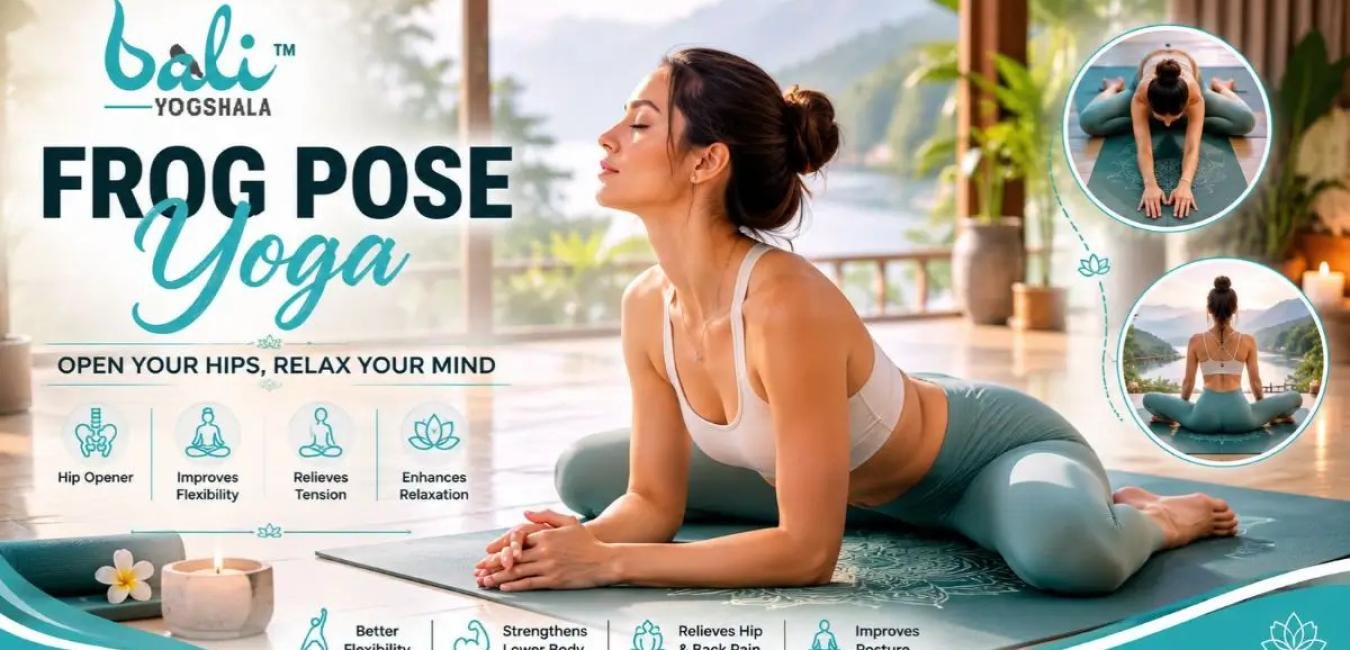
Frog pose is a specific yoga pose that involves mindfulness and breathing during the practice. This particular yoga pose has potential benefits like entire body relaxation. It also helps to release physical and mental tension. Hence, this yoga posture is suitable for both beginners and experienced practitioners.
Table of Contents
- What Is a Frog Pose?
- Frog Pose in Yoga: Understanding the Position
- What Does Frog Pose Stretch?
- 1. Inner Thighs and Adductors
- 2. Hips and Groin
- 3. Lower Body Muscles
- Frog Pose Benefits
- 1. Improves Hip Flexibility
- 2. Supports Inner-Thigh Mobility
- 3. Helps Release Tension in the Hips
- 4. Improves Lower-Body Mobility
- 5. Promotes positive breathing and relaxation
- Frog Pose Benefits for Female Practitioners
- 1. Helps keep hips mobile and fluid
- 2. Enhance the flexibility of the lower body
- 3. Improves Body Awareness
- Frog Pose Benefits for Male Practitioners
- 1. Improves Hip and Groin Flexibility
- 2. Supports Lower-Body Mobility
- 3. Helps Release Tightness After Physical Activity
- How to Do the Frog Pose?
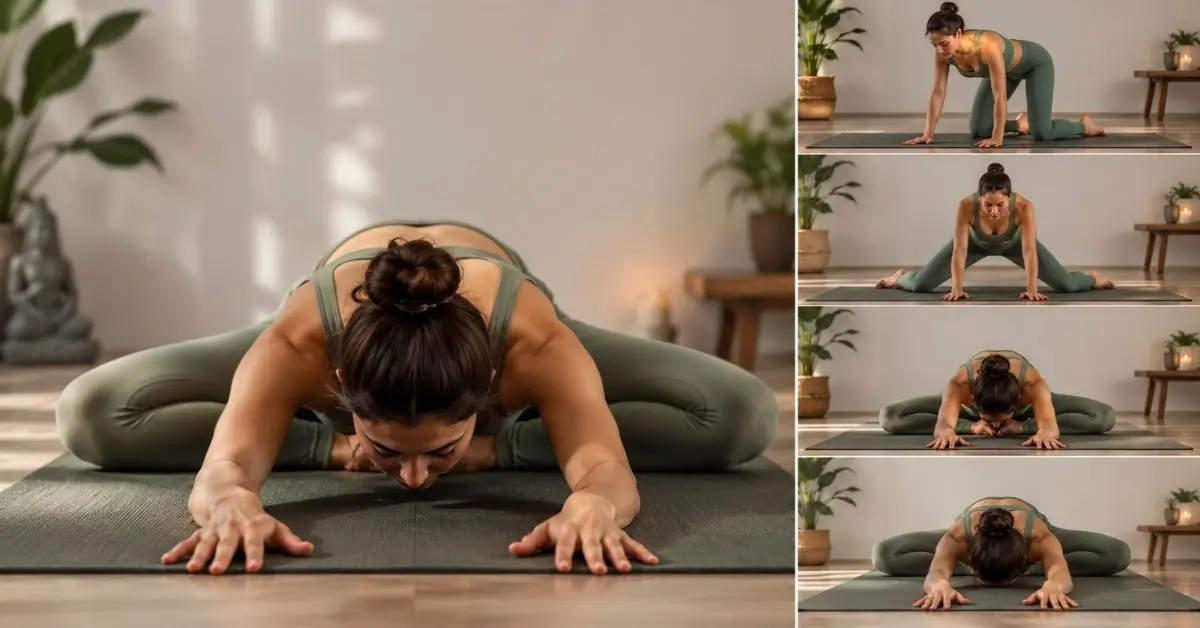
- 1. Start on Your Hands and Knees
- 2. Gently Spread Apart Knees
- 3. Place Your Feet and Ankles
- 4. Place Down on Forearms
- 5. Breathe and hold the position
- Frog Pose Sitting: Does it equal Frog Pose?
- Frog Hold Exercise Vs Frog Pose in Yoga
- Common Mistakes to Avoid in Frog Pose
- How to Modify Frog Pose for Beginners?
- Conclusion
What Is a Frog Pose?
Frog Pose or Mandukasana is mainly a hip-opening posture that is quite intense. By practising this yoga, you can bring your awareness back to the breath. You must be very mindful while getting out of the posture to avoid injuries. This yoga posture is designed to target inner thighs, groin and hips. Frog pose yoga opens deep hip tension through intense inner thigh stretch.
Frog Pose in Yoga: Understanding the Position
Literally translated as the pose of the frog, Frog Pose (mandukasana) is a yoga posture that is deeply hip-opening and involves the knees spread apart while the lower legs and feet remain aligned. This posture is frequently used to stretch the inner thighs, hips and groin and to promote increased pliability of the lower body. The frog hold exercise builds core stability and hip adductor strength.
It's practised by getting on hands and knees, gradually spreading knees out, and taking a knee down onto forearms, but without letting the hips go loose. Take slow, deep breaths, and don't overextend the stretch. Newcomers should refrain from hurting themselves and seek help when necessary. Frog pose can be useful as a stretch or mobility exercise as well as part of a flexibility routine, but not if it causes pain or discomfort.
What Does Frog Pose Stretch?
Frog Pose opens the inner thigh, groin and hips. It is mainly a stretch and gently tones the muscles of the pelvis and lower limbs. The wide-knee position places the adductor muscles under a deep stretch and encourages greater hip mobility. It may also affect the pelvic, quadriceps, buttocks and hamstring muscles. Key frog pose benefits include improved hip flexibility and reduced lower back tension.
Slowly doing the pose can help enhance flexibility of the lower body and mobility. Frog pose is a great stretch, so enter into the position slowly, take a slow and steady breath, and don't push through the pain. Cushions or bolsters may be used for additional support and comfort for beginners.
1. Inner Thighs and Adductors
Frog Pose offers a deep stretch for the inner thighs and adductor muscles, which pull the legs towards the body. Simple, consistent and gentle stretching of this area can increase flexibility and mobility. Practising the frog position yoga deeply stretches the inner thighs and groins.
2. Hips and Groin
A wide knee stance forms a wide opening in the hips and groin. This can help reduce tension and increase hip movement as long as it's done carefully and slowly.
3. Lower Body Muscles
Frog Pose also works and stretches several muscles in the lower leg, such as the hip flexors, glutes, hamstrings and pelvic muscles. The posture may be used in conjunction with a flexibility programme and can help with improved overall lower-body mobility.
Frog Pose Benefits
Frog Pose is a deep hip-opening pose that can help increase flexibility and mobility in the Hip, Groin and Inner Thighs. It can be beneficial if it is performed with correct posture and breathing – it may be able to relieve tension in muscles and facilitate mobility in the lower body. The posture can also foster a mindful, balanced practice and awareness of the body. The frog pose stretches the hip flexors, inner thighs, and groin muscles.
1. Improves Hip Flexibility
Frog pose gently stretches the hips with the knees on a wide base. With consistent and continuous practice, hip flexibility could improve, and it may make some motions more comfortable.
2. Supports Inner-Thigh Mobility
The posture gives a strong stretch for the adductor muscles and inner thighs. Repeat and practice this pose without forcing the stretch – this can help to increase mobility in the inner-thigh area.
3. Helps Release Tension in the Hips
Slow and steady breathing in Frog Pose can help to calm tight, tender hip and groin muscles. It can be beneficial as part of a mindful stretch or movement exercise.
4. Improves Lower-Body Mobility
Frog Pose can help to release tension in the hips, groin, inner thighs and surrounding muscles and can help to improve overall mobility in the lower body. Enhanced flexibility can aid in going about daily living and exercising. Frog pose benefits for females include easing menstrual cramps and opening pelvic tightness.
5. Promotes positive breathing and relaxation
Frog Pose may also be practised while taking slow, controlled breaths, promoting relaxation and deepening the awareness of the body's sensations. Practitioners can also be prevented from rushing or breathing too hard if they concentrate on their breathing. Beginners can practice Frog pose yoga using blankets to cushion sensitive knees.
Frog Pose Benefits for Female Practitioners
Frog Pose can also be part of a yoga or mobility practice to promote hip, pelvis and lower body flexibility and movement. May be more helpful for female practitioners when creating hip mobility and greater awareness in the hip area. But they are flexible, and benefits may differ from person to person; therefore, posture should be gradually practised and comfortable for all. The frog pose is a restorative yoga posture that targets hip mobility.
1. Helps keep hips mobile and fluid
Frog Pose is an open hip position with the hips looking outside that helps keep the hip and pelvis joint mobile. Gently practising the posture can help to maintain a wider range of comfortable movement.
2. Enhance the flexibility of the lower body
This position will give you a deep stretch in the inner leg, groin area and lower leg muscles. Rehearse with consistency to begin to increase flexibility over time, but not at the complete expense of forcing the joint/muscles. Frog pose in yoga is widely used to open tight hips before deep backbends.
3. Improves Body Awareness
Frog Pose can be combined with slow and steady breathing, getting more attuned to tension and physical sensations. Sitting in the pose mindfully can help to relax and maintain a focused yoga experience.
Frog Pose Benefits for Male Practitioners
Men practising Frog Pose may find it beneficial to use this pose in a flexibility and mobility session. This posture emphasises the hips, groin, inner thighs and muscles of the lower body that may be tight from too long sitting or regular running. Gradually practising it can help promote ease of movement and flexibility in leg and hip area. Frog pose sitting allows you to stretch your inner thighs comfortably while grounded.
1. Improves Hip and Groin Flexibility
Frog Pose offers a good stretch to the groin, hip and inner thighs. Slowly, with regular practice, they will become more flexible and be able to move more comfortably in these areas.
2. Supports Lower-Body Mobility
In this position, the knees are widely placed to promote hip/pelvic mobility and stretch the adductor muscles. This can assist with maintaining mobility necessary for activities like walking, squatting, running and strength training.
3. Helps Release Tightness After Physical Activity
Doing these kinds of activities, such as walking or running, could be causing the dreaded RSI (repetitive strain injury) in your muscles that might benefit from Frog Pose. Being used as an after-exercise gentle stretch, it could help relaxation and flexibility, but should not be employed to stretch through acute injury or pain.
How to Do the Frog Pose?
Frog Pose is a deep hip-opening pose with a slow entrance where the stretch can be pushed in slowly. Correct breath control and positioning will make it easier to practice the pose. You must do these steps and STOP if you feel any sharp pain or discomfort. To learn how to do the frog pose, widen your knees and press your hips backwards.
1. Start on Your Hands and Knees
Sit on a yoga mat with your hands under your shoulders and knees under your hips. Maintain a neutral spine, and look at the floor.
2. Gently Spread Apart Knees
Slowly bend knees outwards, increasing separation of knees to comfortable width. Limit your movement and do not try to push your knees too far into a squat position.
3. Place Your Feet and Ankles
Rotate feet away from each other, keeping ankles in line with knees. Take care to ensure your lower legs are comfortable and do not put excessive pressure on your ankles.
4. Place Down on Forearms
With knees comfortably wide, drop forearms slowly in towards the mat. Control hips and avoid uncomfortable tightness in the inner thighs and groin.
5. Breathe and hold the position
Breathe slowly and deeply, maintaining the position for a comfortable length of time. Come into the stretch without bouncing or pushing towards a deeper stretch, and then slowly move the knees back together to exit the pose. Frog pose benefits for males include relieving tight groin muscles from heavy weightlifting.
Frog Pose Sitting: Does it equal Frog Pose?
Frog Pose Sitting is not necessarily the same as the traditional Frog Pose commonly practised in yoga. Although this stance is traditionally called Frog Pose, it can mean different postures in different yoga schools, and the wide-knee, forearm-supported stance is sometimes called Frog Pose or Mandukasana in modern yoga.
Seat frog positions typically do not rely as much on the deep hip and inner thigh stretch, and are mostly sitting. Hence, it's crucial to look at the particular technique and yoga lineage being practised before inferring that the two patterns are the same.
Frog Hold Exercise Vs Frog Pose in Yoga |
||
|---|---|---|
| Feature | Frog Pose in Yoga | Frog Hold Exercise |
| Main focus | Hip and groin mobility | Strength and endurance |
| Movement | Mostly static | Can involve active engagement |
| Breathing | Slow and mindful | Controlled breathing |
| Intensity | Gentle to moderate | Moderate to high |
| Common purpose | Flexibility and relaxation | Conditioning and strength |
Common Mistakes to Avoid in Frog Pose
It's important to perform Frog Pose properly, because it is a deep stretch.
- Pushing knees open: Push knees apart but not to the extreme in order not to overstretch them.
- Twisting lower legs or ankles: Do not introduce this twist into the lower legs and feet, as it would cause extra stress and tension on the joints.
- Bouncing in hip drop: Lower hips slowly and keep control in hip drop.
- Breathe in a slow and steady manner while holding your breath: helps relax the body into the stretch.
- The bounce in the pose: Do not shake, bounce or make jerky movements which unduly stretch the tensed muscles.
- Avoid sharp pain, numbness, or major discomfort: Abandon the pose if you feel any sharp pain, numbness or major discomfort.
How to Modify Frog Pose for Beginners?
Frog Pose can be modified to simplify the stretch for beginners by bringing the knees closer together, then moving them farther apart as space experiences widen.
- Put your knees closer together: Start with a more narrow stance and then increase the knees spread as flexibility increases.
- Apply knee support: Rest a blanket or yoga mat on your knees to take pressure and make it comfier.
- Lower to forearms blocks body: If this is difficult to do with just a cushion, put a bolster under your chest instead.
- Don't put your hands on the ground: Novices hold their arms completely extended rather than resting the forward part of their arms.
- Keep the hold brief: Begin with a short hold and progress upwards by lengthening the hold as it becomes more comfortable.
- Inhale and exhale slowly: Breathe normally; do not push your body further into the stretch.
Conclusion
Frog Pose is an accessible posture for opening the hips deeply, where the main focus is on opening up the inner thighs, groins and hip muscles. Gradual practice with proper alignment and mindful breathing may help to support flexibility in the lower body, hip mobility and relaxation. Daily Frog pose yoga improves lower body mobility and relieves groin tightness. Beginners should not overextend any stretch, and if it is required, they should employ appropriate modifications. Having practised the pose consistently over time and maintaining a comfortable position to do so is more important than getting it as deep as possible.
Share Post
No Comments Yet