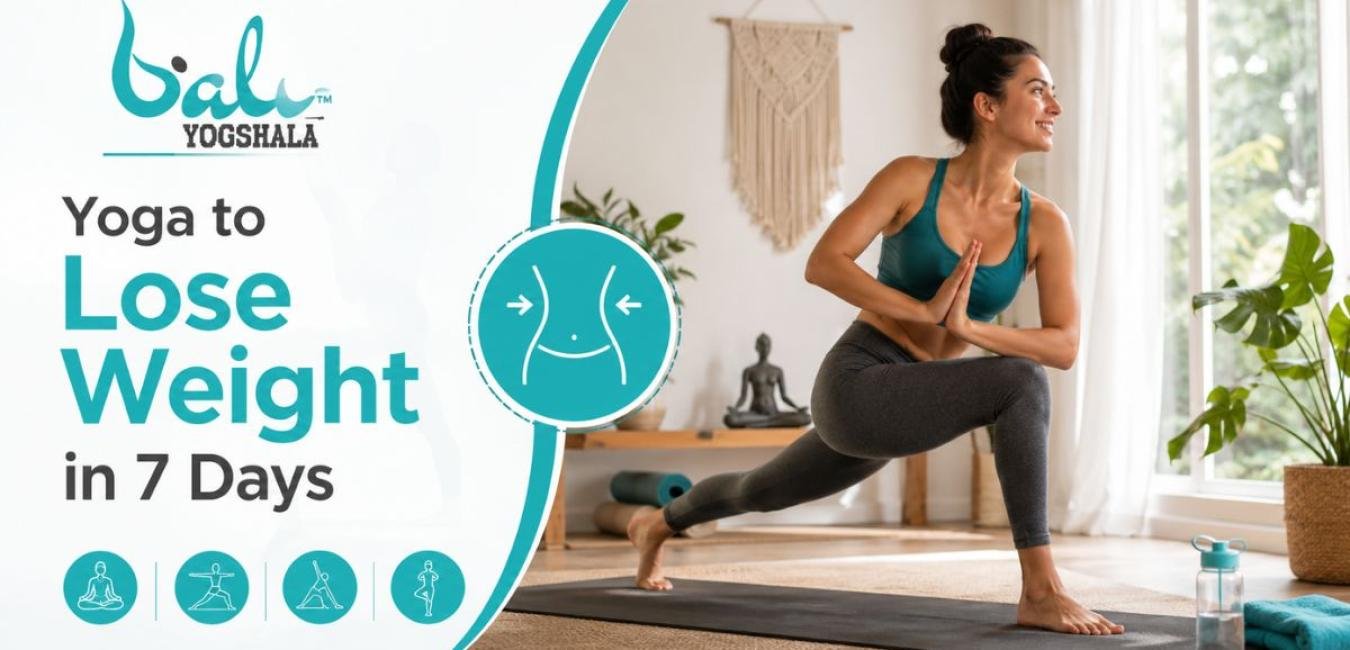
By engaging the body, muscles, mobility and being mindful of what they eat, yoga can be used to assist with weight management. But it is not likely that you will see any major or lasting weight loss in just seven days. Maintaining a regular yoga practice, a healthy diet, proper rest and exercise is a more long-term solution. This 7-day yoga routine will help you establish a consistent practice and maintain fitness, suitable for beginners.
Table of Contents
- Can You Lose Weight With Yoga in 7 Days?
- How Does Yoga Help With Weight Loss?
- Best Yoga Poses for Weight Loss
- Surya Namaskar (Sun Salutation)
- Utkatasana (Chair Pose)
- Virabhadrasana (Warrior Pose)
- Trikonasana (Triangle Pose)
- Phalakasana (Plank Pose)
- Navasana (Boat Pose)
- Bhujangasana (Cobra Pose)
- Setu Bandhasana (Bridge Pose)
- Dhanurasana (Bow Pose)
- Adho Mukha Svanasana (Downward-Facing Dog)
- Best Time to Do Yoga for Weight Loss
- Morning Yoga
- Evening Yoga
- Yoga Before or After Meals
- Yoga for Belly Fat: What You Should Know?
- How Long Should You Do Yoga for Weight Loss?
- 7-Day Yoga Weight Loss Challenge: Easy Daily Routine
- Conclusion
Can You Lose Weight With Yoga in 7 Days?
Small changes in weight may occur, and you might experience bloating and/or changes in body sensation after a week of regular yoga practice, but significant fat loss typically takes longer. Changes in body weight may also be caused by changes in water levels, food consumption and digestion over the course of a week, not a decrease in body fat. With regular practice and a proper diet and exercise routine, yoga can help maintain a healthy weight. So, the idea of a seven-day challenge should be to build a healthy habit, not to lose weight quickly.
How Does Yoga Help With Weight Loss?
Depending on the type and level of yoga, it can lead to an increase in physical activity and involve several muscle groups. Any pose that gets your heart rate up is a dynamic one that can help burn calories a day, and strength poses can help build muscular endurance. Yoga can also increase eating awareness, stress and sleep awareness, which can all affect weight control. Yoga is one beneficial tool that can be incorporated into a weight-management program when it is practised regularly along with a balanced lifestyle.
Best Yoga Poses for Weight Loss
Some yoga poses engage multiple muscle groups and may require you to work harder while performing them. Standing, core, balancing and flow can all be incorporated into a comprehensive routine. It is important for beginners to focus on positioning and breathing control, rather than attempting more complex movements. Here are a few yoga poses that can be part of a basic yoga workout for fitness and weight loss.
Surya Namaskar (Sun Salutation)
Surya Namaskar is a series of yoga asanas that include forward bends, lunge, plank, and upward and downward facing poses. The sequence may be repeated at a comfortable pace to achieve a full body workout and boost physical activity. It works with arms, legs, core and back and promotes co-ordinated breathing. Players can play just a couple of rounds initially and then build up to more rounds as they get fitter.
Utkatasana (Chair Pose)
Utkatasana (Chair Pose) is a standing posture that involves the thighs, glutes and core. Requires muscular endurance to maintain position and may make yoga more physically demanding. Do not let knees go too far forward past their comfortable range and keep your chest lifted. The beginner can maintain the posture for a shorter period of time and gradually extend the time period.
Virabhadrasana (Warrior Pose)
Virabhadrasana or Warrior Pose is a challenge to balance and stability with the legs, hips and core engaged. Different Warrior variations can be used to create a dynamic full-body practice. It takes deliberate motion and lower-body involvement to keep the posture. Regularly practising this pose as a Warrior can help to build strength, mobility, and physical fitness.
Trikonasana (Triangle Pose)
Trikonasana (Triangle Pose) is an integration of standing strength, stretching and balance. It works the legs, core and opens the hips, hamstrings and sides of the body. It's a not-so-calorie-busting position, but it can be useful for a complete yoga practice. A yoga block can help beginners make the posture more accessible and help keep alignment.
Phalakasana (Plank Pose)
Phalakasana (Plank Pose) is an exercise to strengthen the core with involvement of shoulders, arms and legs. When the body is held in a straight line, abdominal and muscular stability is necessary. Short holds are a good place for beginners to begin, and then gradually work up to longer holds as they get stronger. It's better to keep breathing steadily than holding the pose for too long.
Navasana (Boat Pose)
In Boat Pose (Navasana), the abdominal and hip-flexor muscles are given special attention. Core strength, balance and lifting the torso and supporting the legs. A modified version can be used with bent knees, before straightening the legs, to practise for beginners. Core strength exercises can be incorporated into a fitness program to build core strength.
Bhujangasana (Cobra Pose)
Bhujangasana (Cobra Pose) is an easy-to-do back-strengthening posture that opens the chest and front of the body. It is often used in the flowing styles of yoga, like Sun Salutations. Beginners should not raise the torso up, but rather move in a controlled and comfortable manner, with the extension of the spine. Balanced with more active strengthening and mobility work, Cobra Pose can be incorporated into a well-rounded workout.
Setu Bandhasana (Bridge Pose)
Setu Bandhasana or Bridge Pose strengthens the hamstrings, glutes and core, and promotes hip and spine mobility. This pose can be maintained for a few breaths or in a flowing sequence. Maintain stability in the feet and do not over-extend hips above the body. This may be helpful for a beginner yoga session to incorporate lower body strengthening.
Dhanurasana (Bow Pose)
The Bow Pose, or Dhanurasana, is a more advanced pose that involves the back, buttocks and legs, with the front of the body opened. It needs to be flexible and controlled, so it is advisable that beginners try to take it slowly. Never press the ankles, shoulders or lower back further into the deeper position. People with poor mobility can strengthen and flex their backs initially with easier exercises.
Adho Mukha Svanasana (Downward-Facing Dog)
Down Dog or Down Dog Pose (Adho Mukha Svanasana) stretches the back of the body and strengthens the arms, shoulders, legs and core. It is often used as a connection between poses in flowing yoga sequences. The position can be used to build strength, mobility and body awareness, but not to lose fat in a specific area. If keeping knees straight is uncomfortable, keep them slightly bent.
Also go through:- 100 hour yoga teacher training in bali
Best Time to Do Yoga for Weight Loss
The ideal time for yoga practice is when you are able to practice regularly and comfortably. Some like the early workout times as they can exercise before the day starts; others find it easier to keep up the evening session. Generally, the time you choose to be active doesn't matter as much as how often you are active, how well you recover and how active you are overall. Pick a time that works for you and your energy level.
Morning Yoga
Yoga in the morning can help you get your day off to an active and routine start. A gentle session can be an improvement in mobility, and a more dynamic flow can be a moderate workout. For those who enjoy working out in the morning, maintain a level of intensity that is comfortable, but still be sure to drink water before and after exercising. It's more important to be consistent with weight loss than to hit a certain hour of the day.
Evening Yoga
For those with limited morning time, yoga can be performed in the evening too. A moderate flow can offer physical activity post a sedentary day at work, while the gentle poses can help ease your way into a relaxing evening routine. Don't do very strenuous exercise right before sleep if it interferes with your sleep. Select the intensity of the practice according to your energy and time.
Yoga Before or After Meals
Yoga is generally easier to practice when digested, or at least after a period of digestion, as opposed to immediately after a large meal. You can try practising before or after you have eaten enough to digest. Gentle post-meal movement can be a different level of yoga to a full yoga class and may be more comfortable after a meal. Pay attention to your body and don't use poses that make you feel bad, nauseous or reflux.
Also go through:- Frog Pose Yoga
Yoga for Belly Fat: What You Should Know?
While yoga can help tone and strengthen the abdominal muscles, it cannot target belly fat specifically. Loss of fat doesn't happen in a specific area of the body but rather through the entire body due to the individual's energy balance and overall activity level. Poses with a core focus, like Plank and Boat Pose, can strengthen the abdomen, and dynamic flows can boost overall physical activity. When it comes to shedding body fat, diet and exercise patterns along with other healthy lifestyle habits are recommended.
How Long Should You Do Yoga for Weight Loss?
For beginners, it is recommended to begin with 15 to 30 minutes of yoga and build up to a longer time as fitness and comfort improve. A good sequence that is dynamic, strength-based and recovery/mobility can make for a complete session! More is not necessarily better if there is a negative effect on technique and/or recovery. If you're trying to lose weight, it's better to do shorter sessions of an extended length over the course of weeks and months than to do long sessions for just a few days.
7-Day Yoga Weight Loss Challenge: Easy Daily Routine
The following 7-day plan slowly builds in full body movement, core, strength, mobility and recovery. Newcomers should take their time and adjust poses as needed. Add warm-up movements prior to more challenging poses and end with gentle stretches and relaxation.
|
Day |
Main Focus |
Suggested Duration |
|
Day 1 |
Full Body |
20–25 min |
|
Day 2 |
Core |
20–25 min |
|
Day 3 |
Strength & Mobility |
25–30 min |
|
Day 4 |
Recovery |
15–20 min |
|
Day 5 |
Full Body |
25–30 min |
|
Day 6 |
Core & Lower Body |
25–30 min |
|
Day 7 |
Full Yoga Flow |
30 min |
Conclusion
Yoga can be a part of a weight management program, but seven days is not enough time for a significant amount of weight loss. The best advantage of a one-week challenge is that it can help beginners to build up a habit of moving. Balance nutrition, adequate rest, daily exercise and realistic weight-management goals with yoga. After 7 days, practice regularly and slowly build up the time and/or level of difficulty.
Share Post
No Comments Yet