
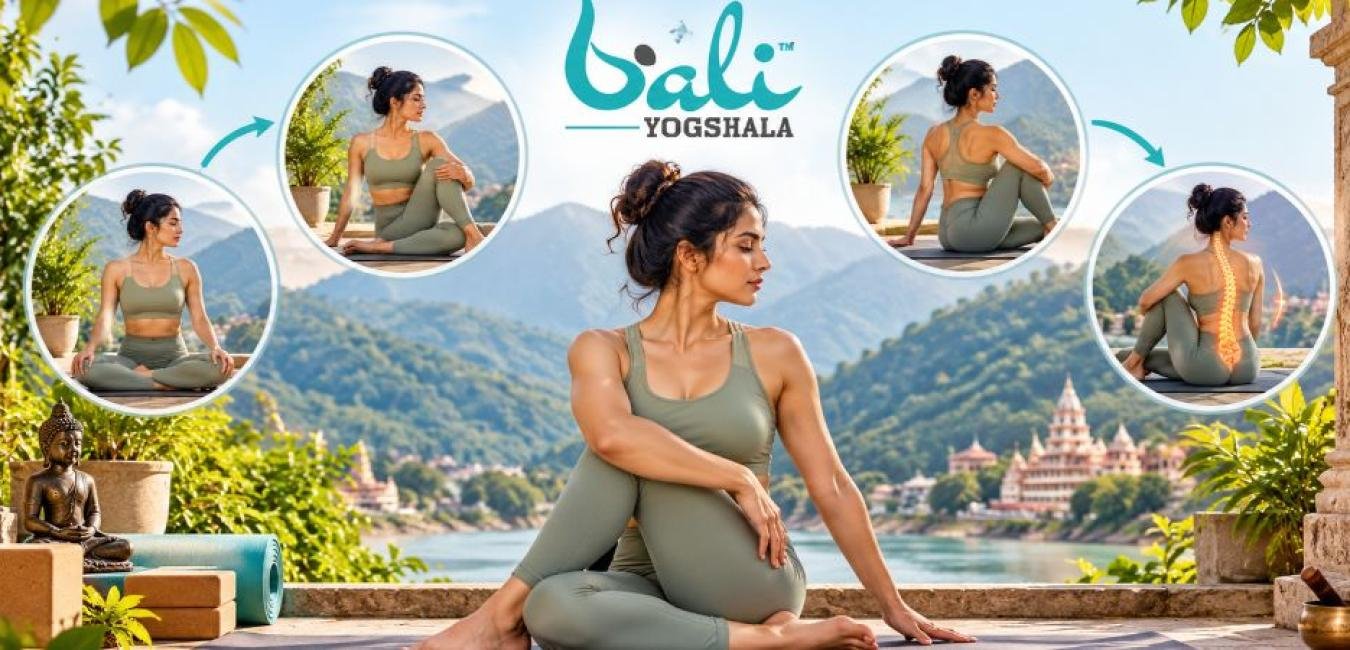
A stiff after long hours of sitting, limited spinal movement or a feeling of heaviness after meals can make everyday life uncomfortable. A simple seated twist may be an addition, to a balanced yoga routine especially when it is practiced slowly and with proper alignment.
Vakrasana, commonly described as a spinal or half spinal twist is a yoga posture that combines gentle spinal rotation with mindful breathing. It is relatively accessible. Can be included in beginner-friendly yoga sessions when there are no medical restrictions.
This guide explains Vakrasana steps, its benefits, the Vakrasana procedure, common mistakes, variations and important precautions so you can understand how to practice it safely.
Table of Contents
- How to Do Vakrasana?
- Breathing During the Pose
- Benefits of Vakrasana (Half Spinal Twist Pose)
- 1. Supports Spinal Mobility
- 2. May Support Comfortable Digestion
- 3. Helps Stretch the Trunk
- 4. May Reduce Everyday Stiffness
- 5. Encourages Better Postural Awareness
- 6. Promotes Mindful Movement
- Common Mistakes to Avoid in Vakrasana
- Precautions and Contraindications
- Vakrasana for Beginners
- Variations of Vakrasana
- How Long Should You Hold Vakrasana?
- Vakrasana Diagram and Practice Tips
- Vakraasan, Vakasan and Other Search Variations
- Final Thoughts
How to Do Vakrasana?
Before beginning, sit on a firm but comfortable yoga mat. Keep your movements slow and avoid forcing your torso into a larger range of motion.
-
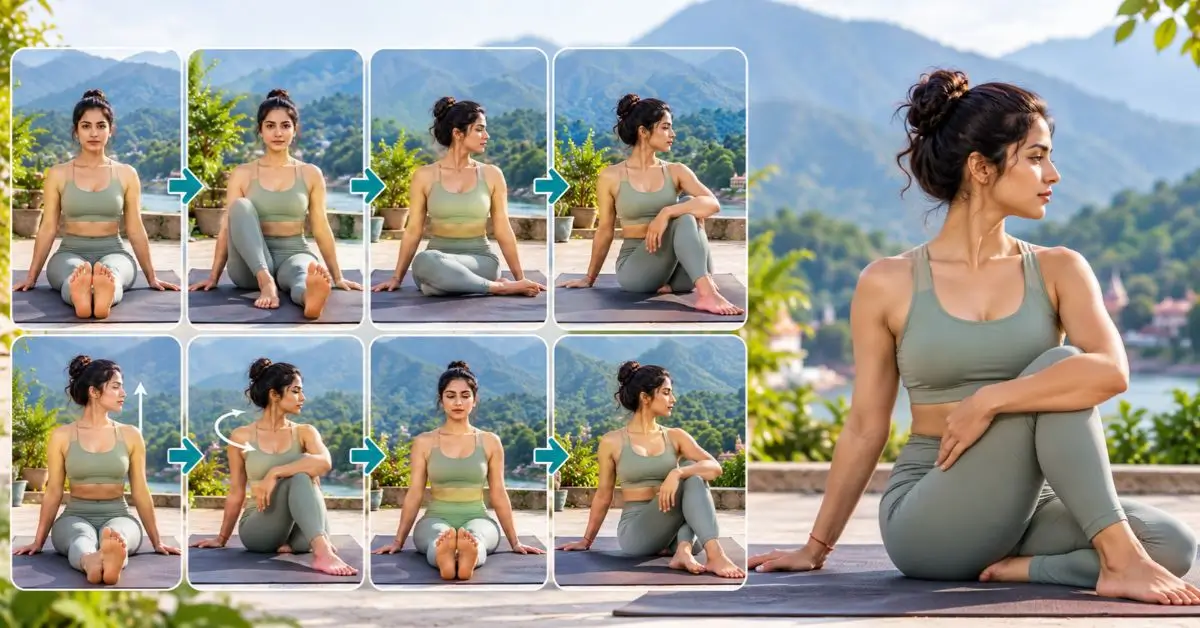
Sit on the floor with both legs out in front of you. Keep your upright and keep your shoulders relaxed.
-
Bend your knee and put your right foot on the floor next to the outside of your left knee.
-
Put your hand on the floor behind your body. Use it mainly for support not to push yourself into a twist.
-
Take your arm toward the outside of your right knee. You can rest your hand on the knee. Use your forearm to support the position depending on how flexible you are.
-
Lengthen your spine upward. Imagine making space between the crown of your head and your pelvis.
-
Exhale. Gently rotate your chest and shoulders toward the right. Turn your head as far as feels comfortable. Continue breathing normally while you hold the posture. The traditional protocol says to hold for about 10–30 seconds while breathing normally.
-
Inhale and slowly bring yourself back to the center. Release your arms. Straighten the bent leg.
-
Repeat the movement, on the opposite side.
The source material also says to return to the starting position in a controlled way and then repeat the sequence on the side.
Breathing During the Pose
Breathing is a part of a comfortable spinal twist. Inhale as you lengthen the spine and exhale as you gently rotate. Do not hold your breath to make the twist feel deeper. A steady breath can help you maintain awareness of your posture and prevent strain.
This seated movement can be helpful as part of a yoga practice. The traditional way of looking at twists connects them with movement and support for digestion while modern research mostly sees yoga as one part of physical activity and well-being rather than a cure for specific illnesses.
Benefits of Vakrasana (Half Spinal Twist Pose)
1. Supports Spinal Mobility
The rotation adds movement through the body. Can help you notice how your spine and the muscles around it move. Regular movement work can be very helpful for people who sit for a lot of the day. However better flexibility should be built up slowly than forced by twisting too much.
2. May Support Comfortable Digestion
One of the most talked about benefits of Vakrasana is its link to digestion. The gentle squeezing and letting go that happens during twisting may make you feel like there is movement in the stomach area.
It is important to not say this pose is a treatment for digestion problems. Symptoms like pain, bleeding, unexpected weight loss or changes in bowel habits need proper medical checkups.
3. Helps Stretch the Trunk
The position includes the stomach area, sides and muscles around the torso. When done comfortably it can create a feeling of space and release in the part of the body.
Another source also mentions stretching the stomach and back muscles as part of the posture.
4. May Reduce Everyday Stiffness
Gentle movement can feel helpful after times when you are not moving much. For someone who has been sitting at a desk traveling or staying in one place for a time a controlled twist might make the feeling of stiffness go down for a little while.
Yoga as a whole has also been looked at for back pain with research showing a small improvement compared to not doing any exercise but results vary and yoga is not always better than other types of movement.
5. Encourages Better Postural Awareness
To hold the position you need to sit up tall than sinking in the chest. This can make you more aware of how your spine's positioned during the practice. The goal is not to hold a stiff position. Instead try to find a comfortable seat with relaxed shoulders and a long spine.
6. Promotes Mindful Movement
The mix of twisting and paying attention to your breath can make the pose feel peaceful. Yoga practices, in general may help with managing stress sleeping better, balance and mental health.
Common Mistakes to Avoid in Vakrasana
The correct technique matters more than twisting:
- Rounding the Lower Back: Avoid collapsing or rounding excessively as you rotate. Start with a seated position and keep the spine long.
- Pulling Yourself Deeper: The supporting arm should not act like a lever that forces the body into a stronger twist. A deeper position is not automatically a better one.
- Moving the Head: Do not twist the neck independently of the rest of the body. Allow the torso to rotate first then turn the head within a comfortable range.
- Holding the Breath: Breath-holding can create tension. Keep the breathing smooth throughout the posture.
- Ignoring One Side: Always repeat the movement on both sides. One side may naturally feel tighter than the other, and that asymmetry should not be treated as a reason to force the tighter side. These common technical errors are also highlighted in the competitor material, particularly excessive force, spinal rounding, shoulder-led twisting, breath-holding, and practicing only one side.
Precautions and Contraindications
Although Vakrasana yoga can be appropriate for many healthy adults, it is not suitable for every situation. People with an acute back injury, recent surgery, significant spinal problems, or pain that increases during twisting should not simply push through the movement. The Common Yoga Protocol specifically advises avoiding Vakrasana in cases of acute backache.
Extra caution may also be appropriate for people with:
- Recent abdominal or spinal surgery
- Significant neck or shoulder problems
- A diagnosed spinal condition
- Acute hip or knee discomfort
- Balance or mobility limitations
- Other medical conditions that affect movement
The competitor material similarly recommends caution with spinal injury, recent surgery, neck issues, pregnancy, and slipped or herniated discs.
Vakrasana During Pregnancy
Pregnancy requires individual modification rather than following a standard twist automatically. According to NCCIH, one should consult a health professional on exercise and yoga, as certain types of yoga should be modified during pregnancy.
A prenatal yoga instructor can help determine whether a particular seated twist should be modified or replaced.
When to Stop
Stop the practice if you experience sharp pain, numbness, tingling, dizziness, unusual weakness, or other concerning symptoms. Yoga should create a manageable physical challenge, not pain.
Read Post:- Hard Yoga Poses
Vakrasana for Beginners
Beginners do not need to rotate deeply to benefit from learning the movement. Start by sitting on a folded blanket if the pelvis tends to roll backward. Keep the extended leg comfortable, and use the back hand for balance rather than leverage.
You can also reduce the intensity by sitting up, and only twisting your torso a little. Practicing it regularly will help gain better awareness and control of your body. Yoga is safe for everyone who is healthy, but it has to be done correctly, and more importantly, people should know what they are doing – at least until they gain enough experience.
Variations of Vakrasana
Once the basic movement feels comfortable, practitioners may explore related spinal-twist variations. Supta Vakrasana is a reclined twisting variation performed on the floor, while Ardha Matsyendrasana is generally a more involved seated twist with different leg positioning.
The supplied competitor material also mentions Kati Vakrasana, Supta Vakrasana, Ardha Vakrasana, and Ardha Matsyendrasana as related variations or progressions. The choice of variation should depend on mobility, experience, and the purpose of the session rather than simply trying to progress as quickly as possible.
How Long Should You Hold Vakrasana?
For beginners, start with a short comfortable hold of several breaths on each side. The Common Yoga Protocol describes a traditional hold of approximately 10–30 seconds with normal breathing.
There is no need to stay in the pose for a long time. Quality of alignment, comfortable breathing, and controlled movement are more important than duration. You can include Vakrasana in a warm-up a Hatha yoga sequence or a gentle cool-down depending on the flow of your practice.
Vakrasana Diagram and Practice Tips
A Vakrasana diagram can be helpful for beginners because the position involves actions at once: one leg remains extended the opposite knee bends, the torso rotates and the hands provide support.
When learning from a diagram or video pay attention to the relationship between the pelvis, spine, shoulders and head than copying the final shape without understanding the movement. The alignment of these body parts matters more than how the pose looks at the end. Focus on how each part moves in relation, to the others.
This helps build awareness and prevents strain. A good Vakrasana starts with control, not flexibility. The movement is gradual. The pelvis should stay grounded as the twists. The shoulders stay open. The head follows the twist not forced. These details help the pose feel safe and effective.
Vakraasan, Vakasan and Other Search Variations
People may search for the pose using different spellings, including vakraasan, vakasan, or “spinal twist pose.” These variations generally refer to searches for the same traditional posture discussed in this guide. Using these terms naturally is useful for search relevance, but the correct and commonly used spelling is Vakrasana.
Also Go Through:- 100 Hour Yoga Teacher Training Course in Bali
Final Thoughts
It is not about being able to stretch your body in certain ways. It is defined by how well you can control the movement, breathe comfortably, and respect your body’s current range.
Vakrasana offers a simple way to introduce controlled spinal rotation into a yoga routine. With steady breathing, an upright starting position, and a gentle approach, it can become a useful part of regular yoga practice.
For beginners, the priority should always be technique before depth. Practice both sides, avoid forcing the movement, and seek guidance when an existing injury, medical condition, or pregnancy changes what feels appropriate for your body.
Share Post
No Comments Yet